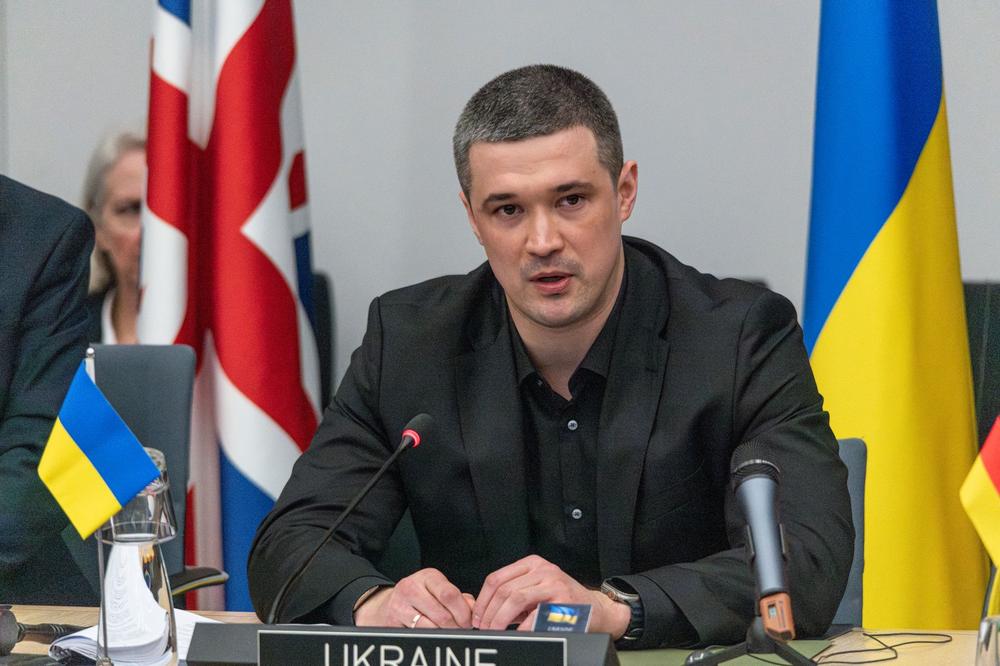
To mark the fourth anniversary of Russia’s full-scale invasion, Defense Minister Mykhailo Fedorov has outlined Ukraine’s wartime strategy to force Moscow to sue for peace.
The plan aims to pressure Russia toward peace by strengthening air defenses, halting Russian advances, and increasing economic pressure on Moscow, Fedorov told journalists at a closed-door briefing on Feb. 23.
"Every day, every Ukrainian thinks about one thing — when the war will end. We want peace more than anyone else in the world." Fedorov said, adding that President Volodymyr Zelensky has tasked the Defense Ministry with reinforcing Ukraine's defenses "in a way that compels the enemy to make peace."
Russia continues fighting because it believes it can prevail through force and resources, Fedorov said, adding that Ukraine's wartime plan therefore focuses on raising the cost of war for Moscow across the military, technological, and economic domains.
Fedorov's remarks come amid ongoing discussions between Ukraine and its partners about potential February negotiations, which Russia has yet to confirm. Four years into the full-scale invasion, the war shows no immediate signs of slowing.
The plan
Fedorov said Ukraine's wartime strategy rests on three core objectives — securing the skies, stopping Russian advances across all domains, and depriving Moscow of economic resources that fund its war.
Protecting civilians and infrastructure remains the top priority. Ukraine aims to detect all aerial threats in real time and intercept at least 95% of missiles and drones through a multilayered air defence system.
"When the sky is secure, the country functions," he said.
The second objective focuses on halting Russian operations on land, at sea, and in cyberspace. Fedorov said Ukrainian forces must inflict losses severe enough to make further advances impossible.
"The enemy pays for every kilometer of Ukrainian land. In the Donetsk region, losses reach 156 soldiers per square kilometer. Our benchmark is more than 200 eliminated occupiers per square kilometer," he said.
The third point targets Russia's war economy. Fedorov argues that oil revenues transported through the so-called "shadow fleet" continue to finance missile production, military contracts, and propaganda.
"The war continues because Russia still has money for missiles and drones," he said, calling for stronger sanctions enforcement and coordinated action with international partners to increase economic pressure on Moscow.
How Ukraine will implement it
Fedorov said the strategy will be implemented through expanded international partnerships, technological superiority, and the systematic use of battlefield data.
Ukraine aims to secure "record levels" of international assistance this year to fund drone procurement, sustain payments for service members, and strengthen air defence systems.
Maintaining a technological edge over Russian forces remains central to the plan. Ukraine seeks to stay "at least ten steps ahead" in innovation cycles, particularly in drone warfare and digital battlefield coordination.
Fedorov highlighted the military's DELTA battlefield management system and the e-Points platform as key tools enabling commanders to make faster and more precise decisions.
"The next step is to turn data into decisive power — to see more, think faster, and strike with greater precision," he said.
 Untitled Gym Game codes (February 2026)