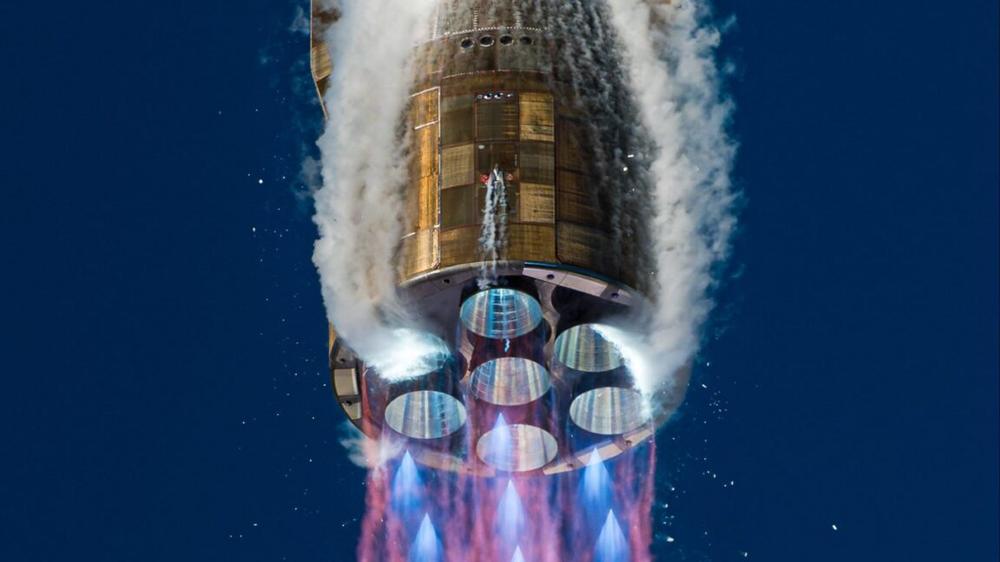
For decades—yes, literally decades—it has been easy to dismiss Blue Origin as a company brimming with potential but rarely producing much of consequence.
But last week the company took a tremendous stride forward, not just launching its second orbital rocket, but subsequently landing the booster on a barge named Jacklyn. It now seems clear that Blue Origin is in the midst of a transition from sleeping giant to force to be reckoned with.
To get a sense of where the company goes from here, Ars spoke with the company’s chief executive, Dave Limp, on the eve of last week’s launch. The first thing he emphasized is how much the company learned about New Glenn, and the process of rolling the vehicle out and standing it up for launch, from the vehicle’s first attempt in January.
“I’ve been surprised at how smoothly the past 30 days has gone, which is way, way less time than the first flight, and kind of on our nominal schedule,” Limp said. “You know, there’s little things that have poked their heads up, but it hasn’t been anything that’s really set us back.”
Launch was delayed due to weather and then a solar storm, but when the skies cleared New Glenn lifted off on time, and the vehicle’s first and second stages performed exceptionally well.
Cadence and manufacturing
Limp said success on New Glenn’s second flight would set the company up for a significant increase in cadence. The company is building enough hardware for “well above” a dozen flights in 2026, with the upper-end limit of 24 launches. The pacing item is second stages. Right now Blue Origin can build one per month, but the production rate is increasing.
“They’re coming off the line at one a month right now, and then we’re ramping from there,” he said of the second stages, known internally as GS-2. “It would be ambitious to get to the upper level, but we want to be hardware rich. So, you know, we want to try to keep building as fast as we can, and then with practice I think our launch cadence can go up.”
The biggest part of increasing cadence is manufacturing. That means BE-4 rocket engines for the first stage, BE-3U engines for the upper stage, and the stages themselves.
“With rockets, it’s hard,” Limp said. “Building prototypes is easy but building a machine to make the machines in volume at rate is much harder. And so I do feel like, when I look at the factories, our engine factory in Huntsville, the rocket factory here at Rocket Park and Lunar Plant 1, I feel like when you walk the floor there’s a lot of energy.”
Since he joined Blue Origin about two years ago, Limp said increasing production has been among his foremost goals.
“You’re never done with manufacturing, but I feel on the engine front we’re incredibly strong,” he said. “We’re going to double the rate again next year. We’ve got work to do, but on second stages I feel like we’re getting there. With the booster, we’re getting there. The key is to be hardware rich, so even if some of these missions have anomalies, we can recover quickly.”
Next stop, the Moon
Blue Origin recovered the New Glenn first stage from last week’s flight and brought it into port on Monday. Although it looks much cleaner than a used Falcon 9 first stage, much of this is due to the use of methane propellant, which does not produce the soot that kerosene propellant does. It will take some time to determine if and when this recovered first stage will be able fly again, but if it’s not ready soon Blue Origin has a third first stage nearing completion.
Whichever first stage gets called upon, New Glenn’s next payload is its Blue Moon Mark 1 lunar lander, a vehicle that is taller than the Apollo Lunar Module that carried humans to the Moon five decades ago.
Limp said the company will soon begin stacking the lunar lander (he promised photos) in Florida. After it is assembled, the lander will be put on a barge and shipped to Johnson Space Center in Houston for testing in a vacuum chamber.
“We’re getting pretty far along,” Limp said of Mark 1. “As soon as you start putting the gold foil on it, it starts looking like a lunar lander. So I can assure you, it’s coming together. Our plan is to still try to fly that in Q1, so I don’t see anything that’s keeping us from being able to do that.”
And after this the goal is to begin flying New Glenn more frequently, to serve a variety of commercial and government customers.
“There’s never been such a high demand for launch as there is right now, even with the cadence that SpaceX is doing,” he said. “So you know, there’s a lot of customers that are rooting for all launch companies—not just Blue, but all of us—to succeed because there’s a lot of people that are waiting in line to get to space.”
 Pokemon fans will need to pass a fitness test before entering new Tokyo theme park