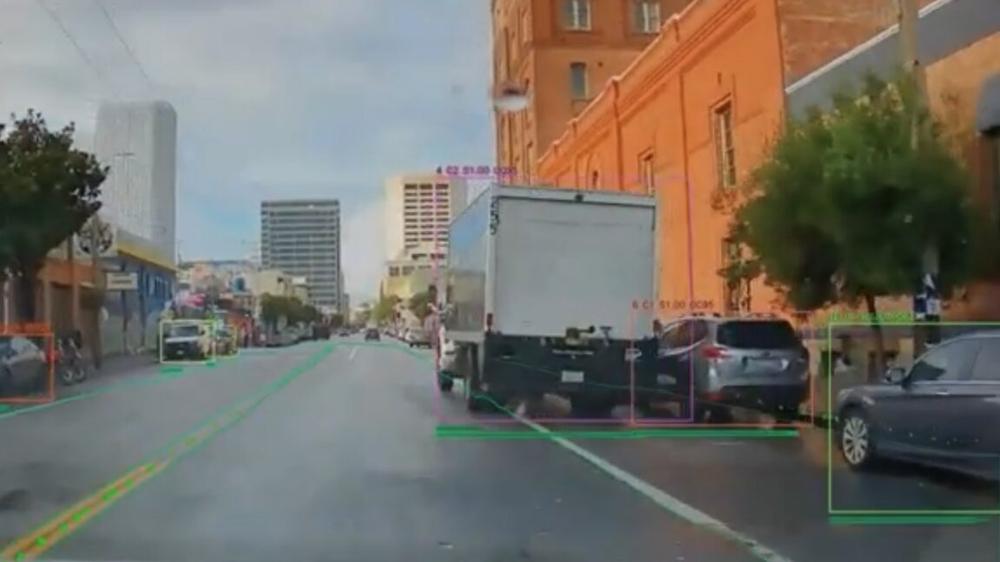
This spring, a Southern California beach town will become the first city in the country where municipal parking enforcement vehicles will use an AI system looking for potential bike lane violations.
Beginning in April, the City of Santa Monica will bring Hayden AI’s scanning technology to seven cars in its parking enforcement fleet, expanding beyond similar cameras already mounted on city buses.
“The more we can reduce the amount of illegal parking, the safer we can make it for bike riders,” Charley Territo, chief growth officer at Hayden AI, told Ars.
Hayden AI’s bus cameras, designed to detect bike lane and bus zone violations, currently exist in two other California cities: Oakland and Sacramento. The company also has installations around the country, including New York City, Washington, DC, and Philadelphia. In September 2025, the company announced that it had installed 2,000 systems on buses worldwide.
Late last year, over a 59-day period, Hayden AI also said its technology detected over 1,100 parking violations at the University of California, San Diego—and 88 percent of those were instances of blocking a bike lane.
Hayden AI says it sells its product to municipalities and related entities to not only increase bus speed (by removing obstructions) but also improve safety.
“We do that by [reducing] one of the biggest causes of collisions with buses—moving out of their lanes,” Territo added. “So the fewer times they have to make a turn, the fewer instances there are [of a crash].”
As part of its setup process, the San Francisco-based startup says that it begins any installation by first mapping a city. Then it teaches the AI the local parking enforcement rules. Typically, those rules say that cars can’t block a bike or bus lane. Traditionally, Hayden AI’s cameras have only been mounted on buses, so enforcement was limited to existing routes.
“We tell our system that if you see a vehicle that encroaches on a bike lane, capture a 10-second video and the license plate of that vehicle,” Territo said.
“From there, an evidence package goes to the [police] and they will review and verify the elements—that a prosecutable violation exists—and then they will issue a violation under [state law]. If there is no violation, the system doesn’t capture any data. The system is only looking for scenarios where a bike lane is blocked and a license plate is evident.”
Local bike advocates have applauded this expansion of automated enforcement.
“Enforcement cannot be everywhere at once. If we can extend their arm so these things can get done, and keep our community safe, that is a win,” Cynthia Rose, the director of Santa Monica Spoke, told Ars. While warning of the potential misuse of bulk data collection in general, Rose was on board with Hayden AI’s particular plan.
“Anywhere where there’s bike infrastructure, where I know of, [blocking the lane] is a problem,” Rose said. “It’s tantamount to parking in handicapped zones. It’s just a flat no.”