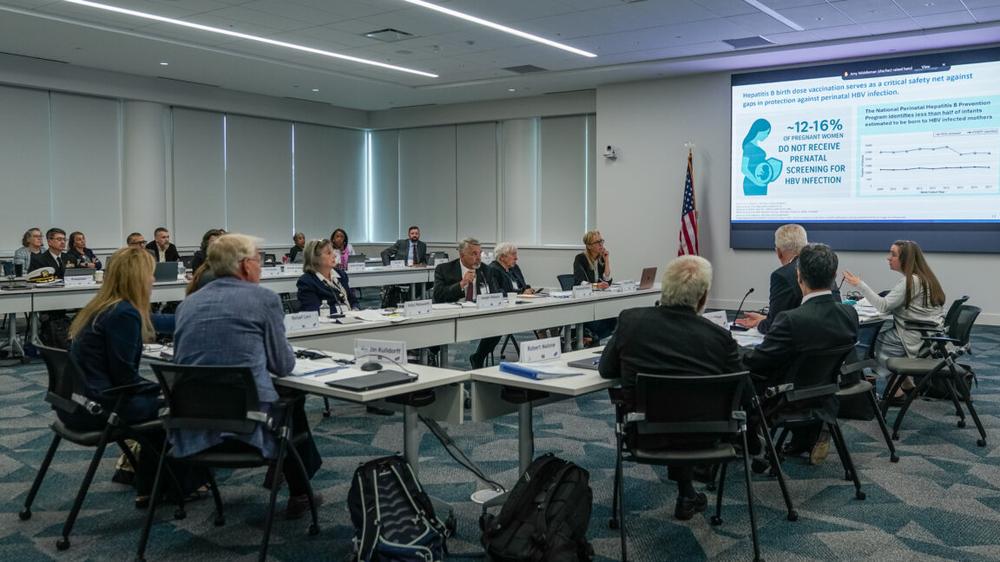
With the government reopening, the dubious panel of vaccine advisors selected by anti-vaccine Health Secretary Robert F. Kennedy is wasting no time getting back to dismantling the federal childhood vaccine schedule.
A meeting that was scheduled for October but put on hold during the shutdown has already been rescheduled for December 4 and 5. A Federal Register notice Thursday said that the meeting will “include discussions on vaccine safety, the childhood and adolescent immunization schedule, and hepatitis B vaccines.” The announcement was light on information beyond that but indicated that there would be a vote on hepatitis B vaccines.
The panel—the Advisory Committee on Immunization Practices (ACIP) for the Centers for Disease Control and Prevention—is typically composed of preeminent, extensively vetted vaccine experts. But, in June, Kennedy summarily fired all 17 experts on the panel and installed 12 new members, almost all of whom are questionably qualified and espouse anti-vaccine views.
In the most recent meeting in September, the panel had planned to vote on altering the current recommendations for hepatitis B vaccinations but then abruptly abandoned the plan after they realized that the proposed recommendation made no sense and was not based on data.
First try
Hepatitis B vaccines are administered in three doses: the first on the day of birth, the second at 1 to 2 months, and the third between 6 and 18 months. The vaccine protects against a serious liver infection that, when acquired early in life, almost always becomes chronic, leading to liver disease and cancers. With a dose at birth, doctors close any window in which babies are vulnerable to the highly infectious virus, which can be spread from people who don’t know they have it. About 2.4 million people in the US are infected, and about 50 percent aren’t aware of their infection.
Adam Langer, acting principal deputy director of the CDC’s National Center for HIV, Viral Hepatitis, STD, and Tuberculosis Prevention, presented a ream of data at the September meeting. He noted that there are no significant safety concerns about the vaccine, including the birth dose.
Nevertheless, Kennedy’s ACIP members planned to push the first dose back a month. A vote was prepared to recommend not giving a birth dose unless there was “individual based decision-making.” While at first the panel seemed poised to vote in favor of the change, the plan collapsed with basic questioning.
Voting ACIP member Joseph Hibbeln, a psychiatrist, noted: “I’m unclear if we’ve been presented with any safety or data comparing before one month to after one month,” he said. They had not.
“And,” Hibbeln continued, “I’m wondering why one month was selected as our time point and if there are data to help to inform us if there’s greater risk of adverse effects before one month or after one month at all.”
There is no data suggesting that such a move would be more or less safe.
The discussion quickly spiraled from there with an eventual vote of 11-1 to table voting on the vaccine recommendation. According to the Federal Register notice, ACIP will try to take up the topic again. They could revive the vote or attack some other aspect of vaccine recommendations.
Pediatricians fight back
Health experts have blasted Kennedy’s lineup and their attacks on childhood vaccines, including the hepatitis B vaccination schedule. The current schedule “remains the best protection against serious health problems like liver disease and cancer,” the American Academy of Pediatrics emphasized to Ars.
With ACIP’s standing tarnished under Kennedy, AAP has put forth its own evidence-based vaccine schedule for pediatricians to trust. They’ve also been a prominent opponent among medical organizations to Kennedy’s efforts. For instance, in a revised federal lawsuit, the AAP along with other medical organizations is seeking to overturn all decisions made by Kennedy’s ACIP and replace the entire panel with actual experts.
Kennedy’s appointees “lack the credentials and experience required of their role,” and all their votes should be declared “null and void,” the organization said.
AAP President Susan Kressly said that pediatricians are already seeing the effects of having an anti-vaccine activist as the US health secretary, namely “fear, decreased vaccine confidence, and barriers for families to access vaccines.”
“The nation’s children are already paying the price in avoidable illnesses and hospitalizations,” Kressly said. “We urge federal leaders to restore the science-based deliberative process that has made the United States a global leader in public health. Urgent action is needed.”
 Vine is making a comeback as diVine, with 10,000 classic clips and a strict no-AI rule