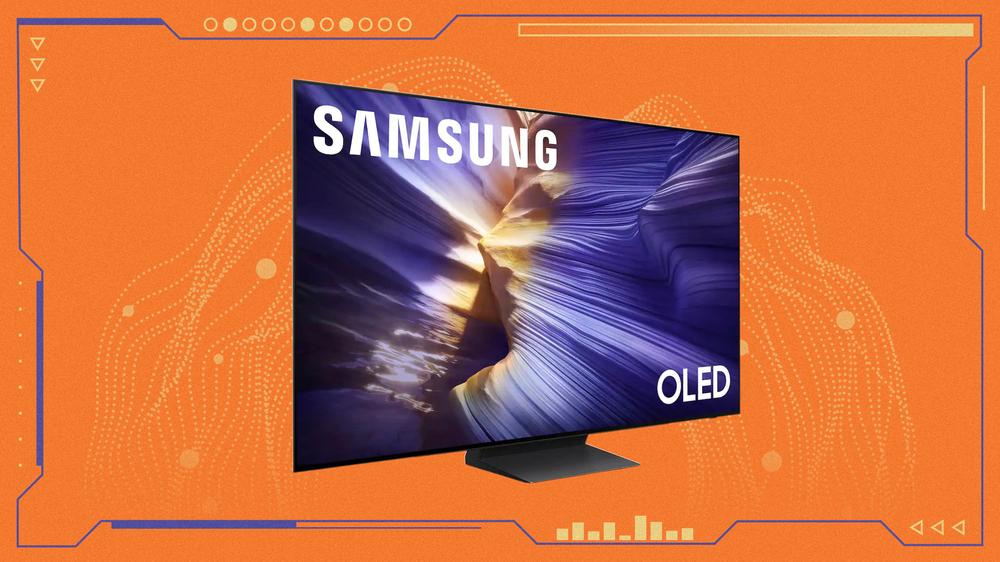
The inclusion of 120Hz VRR support in the PlayStation 5 and Xbox Series X/S has been a major boon for buyers of gaming TVs. At the tail end of 2025, fierce manufacturer competition has bestowed upon us an amazing selection of high performance, reasonably priced televisions that are (or nearly) at parity with some of the best PC gaming monitors. Refresh rates are higher, response times are faster (and better tuned!), input lag is the lowest it's ever been, all while HDR performance continues to get brighter and punchier. But, of course, a few displays stand out from the rest. We've tested and measured some of the top televisions from this year and we're ready to recommend our favorites.
Here's what we look for in a top-performing gaming TV:
High refresh rates, at or above 120Hz with VRR
- Faster refresh rates reduce sample-and-hold motion blur, lower input lag, and make gaming smoother, more immersive, and more responsive. All our recommended TVs ship with at least 120Hz, but faster modes like 144Hz and 165Hz are great for PC gamers as well.
- VRR, or Variable Refresh Rate, allows the display to dynamically change its refresh rate to match the game’s frame rate, removing the distracting screen tearing, judder, and lag associated with traditional V-Sync behavior.
Fast pixel response times
- Fast pixel response times go hand-in-hand with higher refresh rates to reduce motion blur, ghosting, and smearing. OLED, with near instant transitions, is still king in this area. LCD response times (QLED, QNED, Mini-LED, VA, etc.) are generally slower, especially with dark content.
Gaming modes with low input lag
- The best gaming displays will have input lag below 10ms in their game modes, ideally around 1ms. Whether you’re trying to nail a frame-perfect jump in Mario Bros. or a flick shot in Battlefield 6, lower latencies dramatically increase the feeling of connectedness and the precision of your button presses or mouse movements.
- Using game mode to get the benefits of low lag shouldn’t otherwise compromise the performance of the TV; we expect the same calibration, contrast, brightness, and HDR performance in games as we get in movies.
Colorful, bright, high contrast, brilliant HDR
- Deep, vibrant colors demand advanced backlights or quantum dot technology. All our recommended TVs have nearly full coverage of the DCI-P3 color space.
- Sustained fullscreen brightness is important for daytime viewing conditions or games with a lot of bright locations. OLED has definitely improved in this area in recent years, but it still falls far behind its LCD competition.
- Punchy, defined, hyper-bright highlights are the real differentiators between SDR and HDR, and they make the HDR viewing experience, whether in games or movies, really come alive. OLED’s ability to adjust brightness at a per-pixel level means it usually takes top spot here. LCD competitors need hundreds or thousands of backlight zones to achieve a similar, slightly diminished effect, but they can get substantially brighter.
The Best Gaming TV
Best Money-No-Object Gaming TV
Best Gaming TV for Bright Rooms
Best Mid-Range Gaming TV
Best Budget Gaming TV
What kind of TV do I need for PS5?
Most modern TVs will work with the PS5, but to take full advantage of all the console has on offer (including being one of the best Blu-ray players), you may want to spend a little extra for better specs and more features. The PS5 can output a 120Hz refresh rate in 4K through HDMI 2.1, while some games also support VRR and ALLM, ensuring smoother and more enjoyable gameplay. The best TVs for PS5 will offer those specs.
What are the disadvantages of gaming TVs?
Gaming TVs are great for consoles, providing speedy refresh rates, VRR, and game modes to ensure an enjoyable playing experience, but that doesn't mean they're not also great for watching movies or streaming TV shows. These days, the best TVs come with gaming features, whether they're marketed as gaming TVs or not, so you can rest assured that if a TV is good for gaming, it's good for everything else too.
Is a gaming monitor or TV better?
Choosing a display to game on depends on personal preference and how you want to play. The best gaming monitors have an edge when it comes to responsiveness, sporting even higher refresh rates than the best TVs, as well as lower input lag and other advanced display features. Of course, monitors are often smaller in size, more adjustable, and live on a gaming desk. TVs are meant for couch gaming and tend to pull ahead in image quality and HDR performance. We discuss gaming monitors vs TVs here.
 Altman describes OpenAI’s forthcoming AI device as more peaceful and calm than the iPhone