Ukraine’s reset of its state-owned companies has won back some of the trust from Western partners after the country’s worst wartime corruption scandal, but critics warn it doesn’t do enough to address the main issue — government interference.
State-owned companies, which in Ukraine dominate the energy, banking, and infrastructure sectors, have often become battlegrounds for control of their resources. The country's reformers and international partners favor independent supervisory boards to mitigate the risk of corruption, upsetting the various state and non-state actors who want influence over the companies for their own gain.
"Supervisory boards need to be in place to create trust in efficient, corruption-free management of key strategic state-owned enterprises. They will be the ones who will deliver reconstruction to a large degree," Arvid Tuerkner, managing director for Ukraine and Moldova at the European Bank for Reconstruction and Development (EBRD), told the Kyiv Independent.
"It's absolutely key that these companies work efficiently, so the international donor community has the trust to finance these companies."
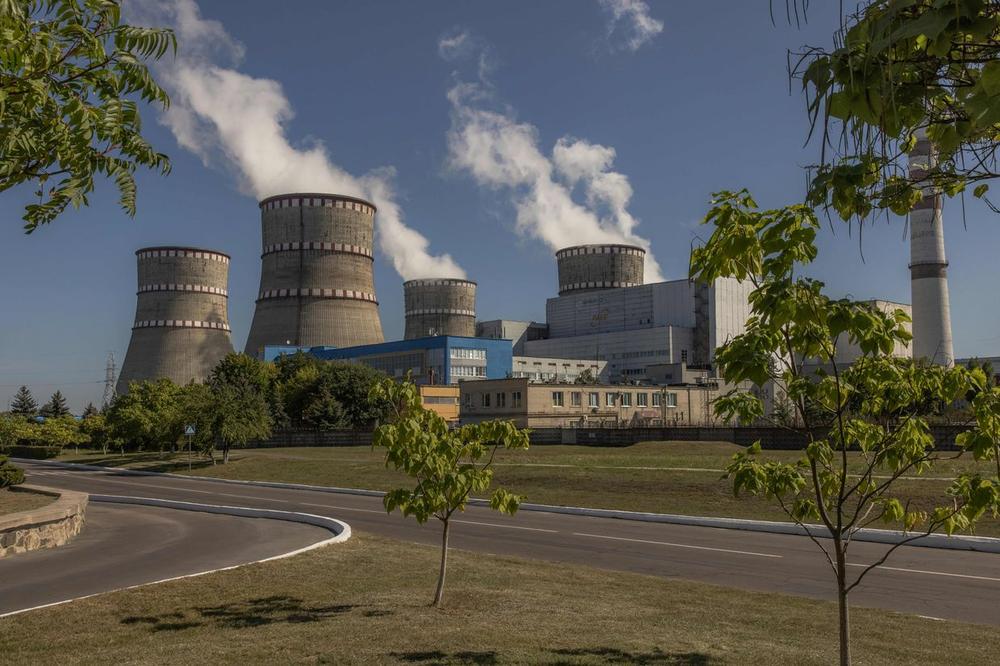
After a $100 million corruption scandal was exposed in the state-run nuclear firm Energoatom last November, a panicked Kyiv announced a "reboot" of supervisory boards across major state enterprises in energy and defense including electricity producer Centrenergo and Ukraine's Gas Transmission System Operator.
The scandal was a "shock to trust and confidence" in President Volodymyr Zelensky’s administration, said Tuerkner. Now, the government’s first steps have roused some confidence and hope that corporate governance will improve, he added.
But the decision raised eyebrows among others, who questioned the effectiveness of overhauling supervisory boards at numerous state companies — even competent ones.
It looked more like a message to reassure international partners than an actual solution, Andrii Boytsun, an independent corporate governance professional, told the Kyiv Independent.
The main issue at Energoatom was that internal anti-corruption safeguards — including the security director's office — were hijacked by allies of ex-Energy Minister Herman Haluschenko, said Boytsun. Energoatom had a supervisory board — but Haluschenko blocked it from functioning properly, and board members did little to confront the problems.
"The failure at Energoatom was not in the supervisory board. The failure was at the level of the shareholder. So if the failure is there, then you should address it there," Boytsun said.
"The state doesn't want supervisory boards. It's pretty clear the current administration doesn't like this, and they didn't like it before the war either."
Revolutionary reforms
Ukraine’s supervisory boards were a product of the 2014 EuroMaidan Revolution to put in safeguards against corruption and government abuse. State-owned companies, which fall under the control of different ministries, were notorious for scandalous business practices prior to the post-revolution reforms.
For the most part, the last 10 years of corporate reforms have been successful, Viesturs Liegis, managing partner at Amrop, a supervisory board consultancy that works with Ukrainian state enterprises, told the Kyiv Independent.
"The biggest risk and biggest threat is political pressure on the selection process."
He sees Kyiv learning from its past scandals, including the Energoatom case, and is confident that Ukraine’s path towards supervisory boards and good corporate governance will encourage investors and clear the way to EU accession.
The new Energoatom board, which was launched on Jan. 28, was a positive example of a near-perfect process, he said. Under intense public scrutiny, the Economy Ministry and international partners, including the EBRD, worked diligently and quickly to establish a new, competent board with experienced professionals like ex-Westinghouse CEO Patrick Fragman.
But other ministries make no effort to implement corporate governance reforms, like the old leadership of the Energy Ministry, he said. At times ministries have tried to influence the supervisory board selection process, afraid to lose control over management of the company, he added.
"The biggest risk and biggest threat is political pressure on the selection process," Liegis said.
In one example, the head of a nomination committee, which selects the final shortlisted candidates, pushed Amrop to include more Ukrainian candidates over international experts. Even though international candidates were assessed to be better suited for the jobs, Amrop had to comply with the "shady" demand, which came at the last minute, Liegis said. He declined to name who was behind the request.
While some Ukrainian companies welcome foreign members on their supervisory boards, tension persists between reform advocates and those resistant to outside oversight. In the meantime, Ukraine is still building up the expertise that can match the caliber of international candidates, said the EBRD's Teukner.
"Often local candidates are not fully independent because of their employment history or other relations," Tuerkner added.
In other cases, ministries simply override supervisory boards. At the start of last year, then-Defense Minister Rustem Umerov fired the head of Ukraine’s arms procurement agency, Maryna Berukova, even though the board had extended her contract. An illegal move, anticorruption activists decried, but Umerov was not punished.
Other times, supervisory boards act as "window dressing" for state companies with acquiescent boards complying with the ministries, said Boytsun. Authorities ask boards "not to do much or ideally nothing," in return for a lucrative paycheck — up to 20,000 euros ($24,000) a month in some companies, he added.
Beyond the quick-fix
As Ukraine positions its economic resources to Western investors, including the recently launched U.S.-Ukraine Reconstruction Investment Fund, corruption fears still deter foreign capital.
To show that it's taking these fears seriously, Kyiv has pushed through reforms for its state-owned companies even during the war. In 2024, the government won the praise of the EBRD after enacting a long-awaited corporate governance law that gave supervisory boards more independence.
Supervisory boards are a key node in the corporate governance structure, which assuage those corruption concerns and attract investors, said Tuerkner. But Kyiv’s reboot of supervisory boards is a "quick fix," and state companies require deeper reforms and legislation amendments over time, he added.
"One idea is a model state-owned enterprise charter. There can be standardized provisions, which then make sure these are model companies that have fewer leeways for state influence," he said.
For Boytsun, for supervisory boards to be effective in rooting out systemic corruption, they need to have full autonomy and no obstacles to their work. That means not just hiring the right people, but also installing internal policies, audits, and verifications within state-run companies, which has yet to be done.
"It’s not water-tight, but it’s about percentages. No surgery is ever 100% hygienically clean, but it's still better to do it in an operating theatre rather than a sewer," he said.
 First Look at Kratos and Atreus in Amazon's God of War TV Show