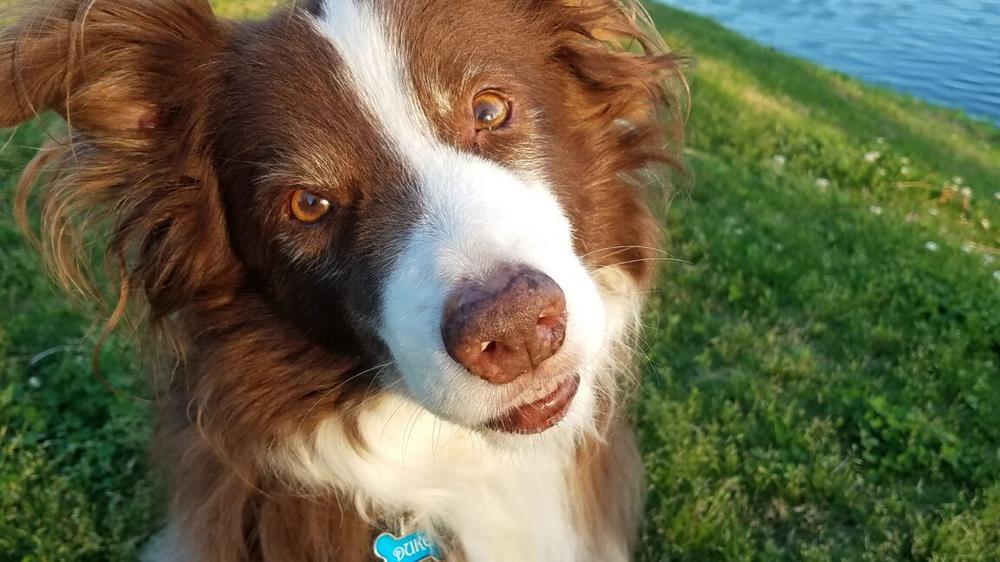
Our best friends come in a fantastic array of shapes and sizes; a Borzoi looks nothing like a Boston terrier, except for a certain fundamental, ineffable (except to taxonomists) doggyness about them. And it’s been that way almost from the beginning. A recent study of dog and wolf skulls from the last 50,000 years found that dogs living just after the last Ice Age were already about half as varied in their shape and size as modern dogs.
“Shaped like a friend” means a lot of different things
Biologist and archaeologist Allowen Evin, of CNRS, and her colleagues compared the size and shape of 643 skulls from dogs and wolves: 158 from modern dogs, 86 from modern wolves, and 391 from archaeological sites around the world spanning the last 50,000 years. By comparing the locations and sizes of certain skeletal landmarks, such as bony protrusions where muscles attached, the researchers could quantify how different one skull was from another. That suggested a few things about how dogs, or at least the shapes of their heads, have evolved over time.
The team’s results suggest that dogs that lived during the Mesolithic (before settled farming life came into fashion in the Middle East) and the Neolithic (after farming took off but before the heyday of copper smelting; 10,000 BCE is a general starting point) were a surprisingly diverse bunch, at least in terms of the size and shape of their skulls.
When Evin and her colleagues used statistical methods to quantify exactly how different the size and shape of dog skulls were, it turned out that dogs from the Mesolithic and Neolithic periods had skulls about twice as diverse as those of Pleistocene canines, and already a little over half as diverse as the skulls of modern dogs. “Some ancient dogs show skull shapes that don’t match any living breed that we have studied,” Evin told Ars in an email. “These forms may reflect early regional adaptations or functions that no longer exist today.”
Those Mesolithic and Neolithic dogs didn’t have the kinds of really extreme features we see in modern dog breeds (looking at you, pugs), but showed they had a lot more variation than Evin and her colleagues expected. Today, there are several hundred distinct breeds of dog in the world (you’ll get different numbers depending on who you ask), and most of them were carefully shaped by dog breeders starting in the Victorian era.
“The concept of ‘breed’ is very recent and does not apply to the archaeological record,” Evin said. People have, of course, been breeding dogs for particular traits for as long as we’ve had dogs, and tiny lap dogs existed even in ancient Rome. However, it’s unlikely that a Neolithic herder would have described his dog as being a distinct “breed” from his neighbor’s hunting partner, even if they looked quite different. Which, apparently, they did.
Bones only tell part of the story
“We know from genetic models that domestication should have started during the late Pleistocene,” Evin told Ars. A 2021 study suggested that domestic dogs have been a separate species from wolves for more than 23,000 years. But it took a while for differences to build up.
Evin and her colleagues had access to 17 canine skulls that ranged from 12,700 to 50,000 years old—prior to the end of the ice age—and they all looked enough like modern wolves that, as Evin put it, “for now, we have no evidence to suggest that any of the wolf-like skulls did not belong to wolves or looked different from them.” In other words, if you’re just looking at the skull, it’s hard to tell the earliest dogs from wild wolves.
We have no way to know, of course, what the living dog might have looked like. It’s worth mentioning that Evin and her colleagues found a modern Saint Bernard’s skull that, according to their statistical analysis, looked more wolf-like than dog-like. But even if it’s not offering you a brandy keg, there’s no mistaking a live Saint Bernard, with its droopy jowls and floppy ears, for a wolf.
“Skull shape tells us a lot about function and evolutionary history, but it represents only one aspect of the animal’s appearance. This means that two dogs with very similar skulls could have looked quite different in life,” Evin told Ars. “It’s an important reminder that the archaeological record captures just part of the biological and cultural story.”
And with only bones—and sparse ones, at that—to go on, we may be missing some of the early chapters of dogs’ biological and cultural story. Domestication tends to select the friendliest animals to produce the next generation, and apparently that comes with a particular set of evolutionary side effects, whether you’re studying wolves, foxes, cattle, or pigs. Spots, floppy ears, and curved tails all seem to be part of the genetic package that comes with inter-species friendliness. But none of those traits is visible in the skull.
Why do dogs come in so many varieties?
But within a few thousand years, generations of domesticated life had started to become visible in dogs’ bones. The oldest dog with a recognizably doggy skull lived at Veretye, a Mesolithic site in northwestern Russia, around 10,800 years ago. Coincidentally, the Veretye dog is also the oldest dog (so far) identified as a dog based on its DNA.
Skulls from domestic dogs that lived about 11,800 years ago look distinctly dog-like; Evin and her colleagues’ statistical methods sorted their features into a different group from the Pleistocene canines and modern wolves. The first noticeable change was size; dog skulls dating to between 8,700 and 9,700 years ago were generally smaller than Pleistocene canine skulls. “On average, early Holocene dogs were smaller than Late Pleistocene wolves and many modern dogs. Especially the dogs from the Mesolithic/Neolithic were much smaller,” Evin told Ars. “Many domestic species exhibit a size decrease during the early phase of domestication, and several explanations have been offered, such as change in diet, or direct selection for more docile, smaller individuals.”
By 8,200 years ago, those smaller skulls started showing more variety in their shape, and by 7,700 years ago, dog skulls varied more in size, too. But why?
Following humans around in return for food is a very different lifestyle than hunting or scavenging like a wolf. Some of the selective pressures that kept most wolves looking fairly similar would have been removed for dogs. At the same time, new pressures—adapting to diets that might have included grain or other table scraps, different types of physical activity, and eventually life in different climates—set in, reshaping dogs in a surprisingly diverse set of ways.
“Whereas Victorian breeding programs are the origins of many of today’s most extreme morphologies, early Holocene domestic dogs exhibited more diverse skull forms than previously considered,” wrote Evin and her colleagues in their recent paper.
Science, 2025 DOI: 10.1126/science.adt0995 (About DOIs).
 After Disney's Doctor Who Break-Up, Spin-Off Series The War Between The Land And The Sea Gets UK-Only Launch Date