The year is 2030.
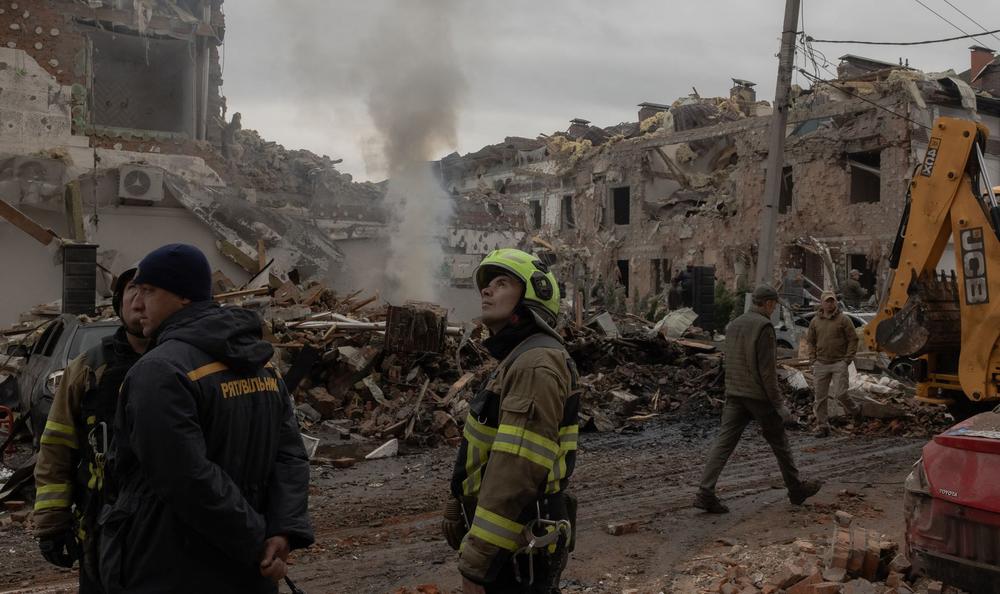
With spring around the corner, Ukraine has just endured the toughest winter of the war yet. It was Russia’s eighth winter campaign against the country’s energy infrastructure. Ukraine’s air defenses have improved. Its grid has grown more resilient. But Russia’s weapons are deadlier, its drone swarms larger, its tactics more adaptive — inflicting severe damage and forcing millions to live in darkness.
Another U.S. administration has come and gone after promising to end the war swiftly. European leaders are once again renewing sanctions and announcing aid packages on the anniversary of Russia’s full-scale invasion.
The United Nations has just released a report calling 2029 the deadliest year for Ukrainian civilians since 2022, when the full-scale invasion started.
Sounds impossible?
It shouldn’t.
Because here we are in 2026, marking four years since Russia launched its full-scale invasion — and the pattern is already set. Russia escalates. Ukraine adapts. The West deliberates. Talks resume. Talks stop. The war grinds on — and Ukraine buries its dead.
In 2022, it was hard to imagine this level of destruction lasting more than a year. In 2023, it was hard to imagine it lasting three. Today, the idea that it could continue until 2030 feels unbearable — but not unrealistic.
Both Ukraine and Russia have demonstrated unwavering determination — one to attack, the other to defend — resulting in a war of attrition that has now lasted for years.
Backed by China and buoyed by continued global demand for its oil, Moscow has sustained its war effort, paying lucrative bonuses to volunteer recruits, upgrading its weapons, and scaling up their production.
With Western — or at this point, European — support, Ukraine has received enough financial and military assistance to keep its guns firing, expand its drone industry and largely hold Russian forces at bay, suffering only incremental territorial losses that come at enormous cost to Russian soldiers.
But what about the peace deal that U.S. officials insist is just around the corner?
When U.S. officials boast about the progress they are making in peace negotiations, they omit an inconvenient but crucial detail.
On the surface, the main barrier to ending the war is a piece of land – specifically, the Ukrainian-controlled part of Donetsk Oblast that Russia wants, and that Ukraine refuses to surrender.
But the impasse is not the land itself.
Russia continues to openly seek nothing less than military-political capitulation from Kyiv, and demanding the bloodless handover of Ukraine’s most fortified strongholds is just the first step. Ukraine, meanwhile, sees Russia’s real intentions for exactly what they are, and has no intention of capitulating.
For Russia, this war is about imperial restoration — whatever name the empire takes this time. Without Ukraine, that project will never materialize.
For Ukraine, the stakes are existential — its sovereignty, its statehood, its identity are on the line.
When both sides view the war in existential terms and both retain external backing, a multi-decade-long conflict is not far-fetched. History offers plenty of such precedents.
So yes, this war could last until 2030 — if the West’s current strategy remains unchanged.
In 2022, the West helped Ukraine survive but not win. Too many decisions that could have shifted the balance early — from advanced weapons systems to sweeping sanctions — were delayed, diluted, or delivered incrementally.
The logic behind this caution was clear: escalate gradually and leave space for Russia to reconsider its course before facing harsher consequences.
Thanks to this, visions of a truly just end to the war, with the return of all occupied territories, have faded.
Four years of full-scale war later, Ukraine is fighting again for survival, and the most important lesson still remains to be learned. Russia does not respond to incentives. It responds to pressure.
The only way to end this war is to make it militarily and economically impossible for Moscow to continue it.
That would require decisions Western leaders have hesitated to take — from cutting off the remaining lifelines of Russian oil exports, to seizing frozen Russian assets to fund Ukraine’s defense, to assuming a far greater share of the burden rather than outsourcing the risk almost entirely to Ukrainians – yes, boots on the ground.
Such steps demand true leadership and political courage — the courage to explain difficult choices to voters, to accept short-term costs, and to act with strategic clarity rather than perpetual caution.
It is the kind of courage Ukrainians showed in the first days of the full-scale invasion, when they chose resistance over surrender and altered the course of history.
After four years of Ukraine doing the impossible, the question is still whether its allies can finally match that resolve.
The next chapter of this war is not predetermined.
It can be another four years of hesitation, incrementalism, and tens of thousands more Ukrainian graves.
Or it can be the chapter in which the West finally decides that managing the war is no longer enough — and chooses instead to help Ukraine end Russia’s aggression once and for all.
 Modelli IA cinesi addestrati “copiando” Claude: la denuncia di Anthropic