It took a while, but a consensus has emerged in Europe that the continent’s space industry needs to develop reusable rockets. How to do it and how much to spend on it remain unresolved questions.
Much of the discourse around reusable rockets in Europe has focused on developing a brand new rocket that might eventually replace the Ariane 6, which debuted less than two years ago but still uses the use it and lose it model embraced by the launch industry for most of the Space Age.
The European Space Agency (ESA) is offering money to emerging rocket companies in Europe to prove their small satellite launchers can do the job. ESA is also making money available to incentivize rocket upgrades to haul heavier cargo into orbit. ESA, the European Commission, and national governments are funding rocket hoppers to demonstrate vertical takeoff and vertical landing technologies. While there is significant money behind these efforts, the projects are not unified, and progress has been slow.
Now, there’s a proposal to retrofit the existing Ariane 6 rocket design for partial reuse. ArianeGroup, a 50/50 joint venture between Airbus and Safran, won a contract from the European Space Agency’s Boosters for European Space Transportation (BEST!) initiative in late 2024.
Going back in time
The origins of the Ariane 6 rocket’s design can be traced back to 2014, when Airbus and Safran unveiled the architecture that finally began flying in 2024. The rocket uses an expendable design, with a cryogenic core stage and two or four strap-on solid rocket boosters, depending on the demands of the particular mission.
At the time, SpaceX had already announced plans to recover and reuse its Falcon 9 boosters. SpaceX recovered the first Falcon 9 booster in 2015, then reused one for the first time in 2017. Officials in Europe were betting against SpaceX’s success and lost. Blue Origin joined SpaceX in successfully landing an orbital-class booster last year, and several Chinese companies are close to replicating the achievement.
Bruno Le Maire, the former French finance minister, said in 2021 that the Ariane 6 was a “bad strategic choice.” More recently, in October of last year, the head of ESA said the continent’s space industry must “catch up” with international competitors like SpaceX and develop a reusable launcher “relatively fast.”
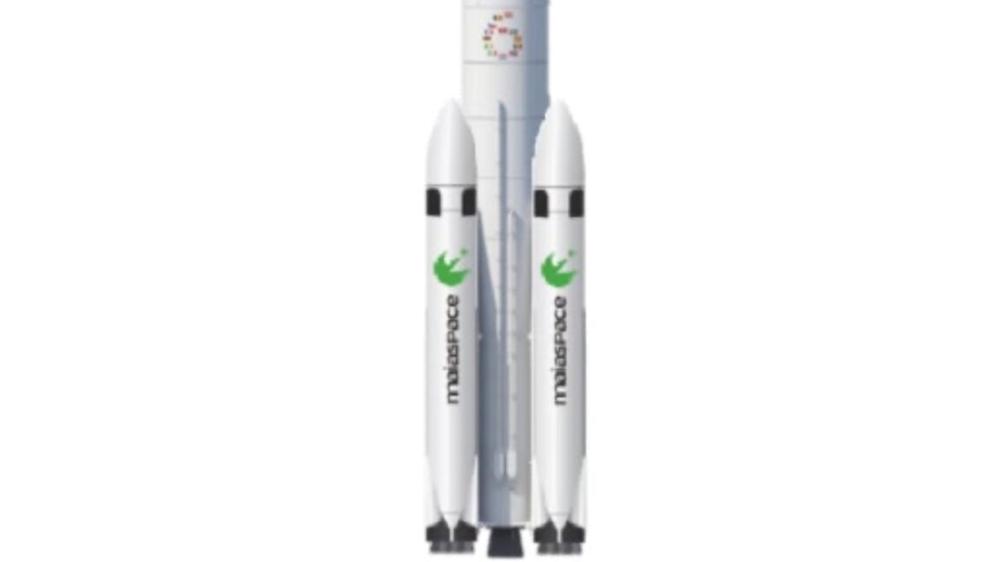
In its submission to ESA’s BEST! initiative, ArianeGroup proposes replacing the Ariane 6 rocket’s solid-fueled side boosters with new liquid-fueled boosters. The boosters would be developed by MaiaSpace, a French subsidiary of ArianeGroup working on its own partially reusable small satellite launcher. MaiaSpace and ArianeGroup would convert the Maia rocket’s methane-fueled booster for use on the Ariane 6.
ArianeGroup’s proposal was first reported by European Spaceflight, which said the concept presented to ESA is similar to an ArianeGroup proposal from 2022, when the company described the liquid reusable boosters as a “plug-and-play” alternative to Ariane 6’s solid-fueled boosters, helping reduce operating costs and increase launch rates.
The details of ArianeGroup’s newest proposal have not been published, but the concept was summarized in a paper presented at the European Conference for Aeronautics and Space Sciences in 2025.
Isar Aerospace, a German rocket startup, won a separate BEST! contract from ESA to study a demonstrator for a reusable first stage based on the company’s light-class Spectrum rocket. The Spectrum rocket’s initial design is expendable. Its first test flight last year ended in failure, and Isar is readying the second Spectrum rocket for another launch attempt later this month.
ESA asked ArianeGroup and Isar Aerospace to assess the feasibility of their proposals, develop technology and system development plans, and define plans and costs for a “major flight demonstration.”
MaiaSpace’s rocket won’t launch until 2027, at the earliest, and it’s unlikely any decision to use it as the basis for new Ariane 6 boosters will bear fruit until long after Maia flies on its own. Even if ESA and ArianeGroup take this route, the Ariane 6 rocket would still be predominantly expendable.
It’s infeasible to recover the Ariane 6’s core stage for many reasons. Chief among them is that the main stage burns for more than seven minutes on an Ariane 6 flight, reaching speeds about twice as fast as SpaceX’s Falcon 9 booster achieves during its two-and-a-half minutes of operation during launch. As a result, the booster would have to rid itself of much more energy when it comes back through the atmosphere. The Ariane 6’s core stage also has just a single engine, whereas SpaceX, Blue Origin, and others use multi-engine designs to better control the rocket’s descent and landing.
The Ariane 6’s payload shroud, used to protect satellites during the first few minutes of launch, is also not reusable. The upper stage is single-use, too. This is a hard problem to solve, but companies like SpaceX and Stoke Space are already working on new rockets with recoverable and reusable upper stages.
Swapping out Ariane 6’s solid rocket motors for reusable liquid boosters makes some economic sense for ArianeGroup. The proposal would bring the development and production of the boosters under full control of ArianeGroup and its French subsidiary, cutting Italy’s solid rocket motor developer, Avio, out of the program.
Introducing the liquid-fueled boosters might also be a way for ArianeGroup to rapidly gain experience in landing and reusing rockets. Each Ariane 6 launch would have multiple boosters, likely two or four, so a single Ariane 6 flight would double or quadruple the flight test data available from just a single booster.
But with this proposal, ArianeGroup is still trying to catch up to where the bleeding edge of the launch industry was 10 or 15 years ago, not where SpaceX, Blue Origin, and others are today, and a far cry from where Europe’s competition in rocketry will be by the time any such an Ariane 6 Franken-rocket could ever reach the launch pad.
 GameStop Closes Hundreds of Stores as CEO Eyes $35 Billion Payout