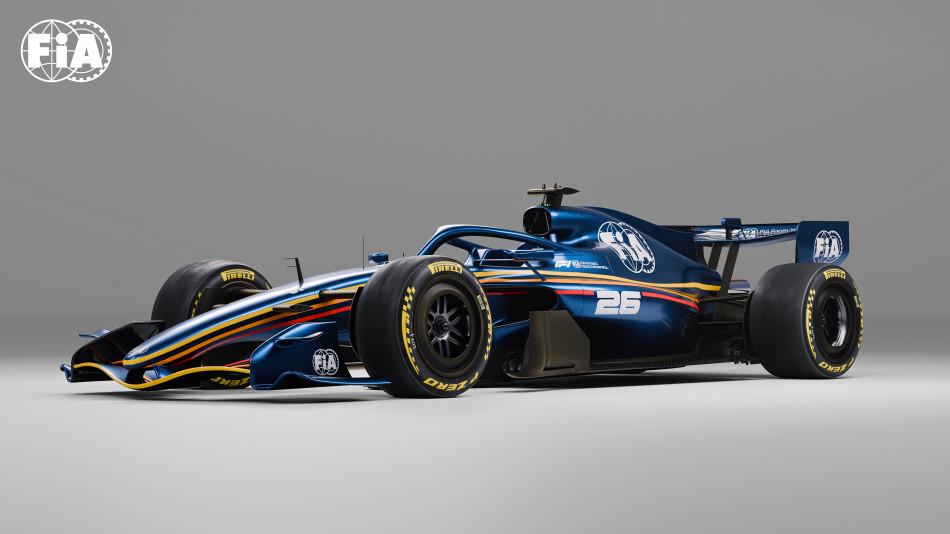
There’s still another couple of months before the 2026 crop of F1 cars takes to the track for the first preseason test. It’s a year of big change for the sport, which is adopting new power unit rules that place much more emphasis on the electric motor’s contribution. The switch to the new power units was meant to attract new manufacturers to the sport, and in that regard, it has succeeded. But controversy has erupted already as loopholes appear and teams exploit them.
Since 2014, F1 cars have used 1,000 hp (745 kW) power units that combine a turbocharged 1.6 L V6 gasoline engine with a pair of hybrid systems. One is the MGU-H, which recovers energy from (or deploys it to) the turbocharger’s turbine; the other is a 160 hp (120 kW) MGU-K that harvests and deploys energy at the rear wheels. Starting next year, the MGU-H is gone, and the less-powerful 1.6 L V6 should generate about 536 hp (400 kW). That will be complemented by a 483 hp (350 kW) MGU-K, plus a much larger battery to supply it.
And the new rules have already attracted new OEMs to the sport. After announcing its departure at the end of 2021—sort of— Honda changed its mind and signed on to the 2026 regs, supplying Aston Martin. Audi signed up and bought the Sauber team. Red Bull decided to build its own internal combustion engines, hiring heavily from the Mercedes program, but Ford is providing Red Bull with the MGU-K and the rest of the hybrid system. And Cadillac has started an engine program, albeit one that won’t take the grid until 2029.
But Audi, Honda, and Ferrari, which has been a constant in the sport since its inception, have filed a complaint with the FIA, the sport’s organizing body, claiming that Mercedes—which will supply the Alpine, McLaren, and Williams teams as well as its own two cars—and Red Bull (which also includes Racing Bulls) are not coloring within the lines.
Compression ratios
At issue is the engines’ compression ratio, which compares the volume of the cylinder when the piston is at top dead center with the volume when the piston is at its closest to the crank. Under the 2014–2025 rules, this was set at 18:1, but for 2026 onward, it has been reduced to 16:1.
This is measured at ambient temperature, though, not while the engine is running. A running engine is hotter—much hotter—than one sitting at ambient, and as metals heat up, they expand. The engines have very short throws, so it doesn’t take much expansion to increase the compression ratio by reducing the distance between the piston and cylinder head at the top of its travel. The benefit could be as much as 15 hp (11 kW), which translates to a few tenths of a second per lap advantage.
Unfortunately for the other teams, the FIA stated that its rules indeed specify only that the compression ratio should be 16:1 based on static conditions and at ambient temperatures. “This procedure has remained unchanged despite the reduction in the permitted ratio for the 2026 season. It is true that thermal expansion can influence dimensions, but the current rules do not provide for measurements to be carried out at elevated temperatures,” the FIA said.
So if Mercedes and Red Bull do have a horsepower advantage, it’s one that will likely be baked into the 2026 season.
The compression ratio clarification wasn’t the only one issued by the FIA. For some time now, F1 has used ultrasonic fuel flow meters as a way to control power outputs. Under the outgoing regulations, this was capped at 100 kg/h, but with the move to fully sustainable synthetic fuels, this is changing to an energy cap of 3,000 MJ/h instead.
In the past, it had been theorized that teams could try to game the fuel flow meters—the most impressive idea I heard involved pulsing more fuel between the sensor’s sampling inputs to boost power, although I don’t believe it was ever implemented.
Don’t even think about being that clever this time, the FIA says. “Any device, system, or procedure, the purpose of which is to change the temperature of the fuel-flow meter, is forbidden,” it says, updating the regulation that previously banned “intentional heating or chilling” of the fuel flow meter.
 Carol of the Bells: the song that made the world speak about Ukraine