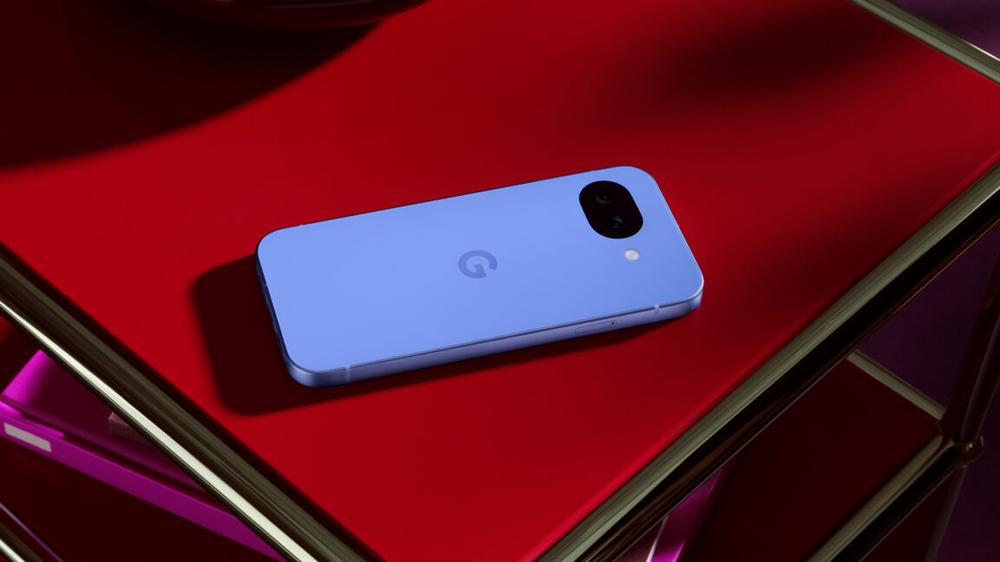
It’s that time of year—a new budget Pixel phone is about to hit virtual shelves. The Pixel 10a will be available on March 5, and pre-orders go live today. The 9a will still be on sale for a while, but the 10a will be headlining Google’s store. However, you might not notice unless you keep up with the Pixel numbering scheme. This year’s A-series Pixel is virtually identical to last year’s, both inside and out.
Last year’s Pixel 9a was a notable departure from the older design language, but Google made few changes for 2026. We liked that the Pixel 9a emphasized battery capacity and moved to a flat camera bump, and this time, it’s really flat. Google says the camera now sits totally flush with the back panel. This is probably the only change you’ll be able to identify visually.
Specs at a glance: Google Pixel 9a vs. Pixel 10a Phone Pixel 9a Pixel 10a SoC Google Tensor G4 Google Tensor G4 Memory 8GB 8GB Storage 128GB, 256GB 128GB, 256GB Display 1080×2424 6.3″ pOLED, 60–120 Hz, Gorilla Glass 3, 2700 nits (peak) 1080×2424 6.3″ pOLED, 60–120 Hz, Gorilla Glass 7i, 3000 nits (peak) Cameras 48 MP primary, f/1.7, OIS; 13 MP ultrawide, f/2.2; 13 MP selfie, f/2.2 48 MP primary, f/1.7, OIS; 13 MP ultrawide, f/2.2; 13 MP selfie, f/2.2 Software Android 15 (at launch), 7 years of OS updates Android 16, 7 years of OS updates Battery 5,100 mAh, 23 W wired charging, 7.5 W wireless charging 5,100 mAh, 30 W wired charging, 10 W wireless charging Connectivity Wi-Fi 6e, NFC, Bluetooth 5.3, sub-6 GHz 5G, USB-C 3.2 Wi-Fi 6e, NFC, Bluetooth 6.0, sub-6 GHz 5G, USB-C 3.2 Measurements 154.7×73.3×8.9 mm; 185 g 153.9×73×9 mm; 183 gGoogle also says the new Pixel will have a slightly upgraded screen. The resolution, size, and refresh rate are unchanged, but peak brightness has been bumped from 2,700 nits to 3,000 nits (the same as the base model Pixel 10). Plus, the cover glass has finally moved beyond Gorilla Glass 3 to Gorilla Glass 7i, which supposedly has improved scratch and drop protection.
Google notes that more of the phone is constructed from recycled material, 100 percent for the aluminum frame and 81 percent for the plastic back. There’s also recycled gold, tungsten, cobalt, and copper inside, amounting to about 36 percent of the phone’s weight. The phone also continues to have a physical SIM slot, which was removed from the Pixel 10 series last year. The device’s USB-C 3.2 port can also charge slightly faster than the 9a (30 W versus 23 W), and wireless charging has gone from 7.5 W to 10 W. There are no Qi2 magnets inside, though.
Internally, the Pixel 10a is even more like its predecessor. Unlike past A-series phones, this one doesn’t have the latest Tensor chip—it’s sticking with the same Tensor G4 from the 9a. That’s a bummer, as the G5 was a bigger leap than most of Google’s chip upgrades. The company says it stuck with the G4 to “balance affordability and performance.”
In fairness, Google has managed to keep the price steady at $499. With components like RAM and storage in short supply this year, prices could rise for many device refreshes.
Why the sidegrade?
Google’s position is that the Pixel 10a still offers a good value despite the middling upgrades compared to last year’s phone. It keeps the Pixel camera experience (which is admittedly great) available at a lower price than the flagship phones. While you get better results with the more expensive Pixels, the 9a was still one of the mobile photography options in 2025. With identical camera hardware in 2026, we expect the 10a to be the same.
But why not make the Pixel 10a a bigger upgrade? Making a better phone theoretically means you sell more of them, right? There are a few possibilities.
By slowing the improvement of the A-series Pixels, Google is making the Pixel 10 look like a better option for buyers. Upgrading the processor and adding features like PixelSnap could make the 10a too appealing compared to the $800 Pixel 10—Google’s A-series phones have been regularly recommended over the flagships due to the lower price and similar capabilities. The Pixel 10’s camera is also less capable than the Pixel 9 was for that generation, making it that much more similar to the A-series.
Component prices are also a concern for 2026. While smartphone development cycles can easily range from 18 to 24 months, Google may have decided late in the game to stick with the Tensor G4 in this phone to offset the higher cost of storage and memory. Google has stressed that it wanted to keep the A-series at its traditional $499 price. As a major player in AI, an industry that is vacuuming up all those parts, Google may have had insight into the coming shortage before most.
Whatever the reason, the Pixel 10a is looking like a very modest upgrade. If you still think it’s the right phone for you, Google will take your money starting today. The device is at the Google Store for $499 with 128GB of storage, and some carriers should begin offering the phone soon. The 256GB version runs $100 more. The Pixel 10a is available in Lavender, Fog, Obsidian, and the new Berry color.
 Toyota’s C-HR electric hatchback starts at $38,135