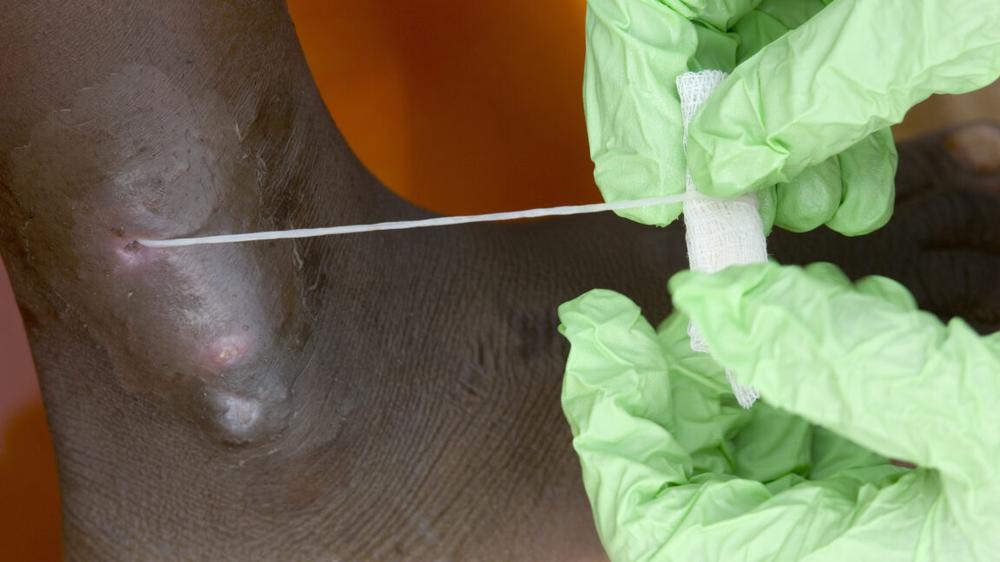
A debilitating infection from the parasitic Guinea worm is inching closer to global eradication, with an all-time low of only 10 human cases reported worldwide in 2025, the Carter Center announced.
If health workers can fully wipe out the worms, it will be only the second human disease to be eradicated, after smallpox.
Guinea worm (Dracunculus medinensis) is a parasitic nematode transmitted in water. More specifically, it’s found in waters that contain small crustacean copepods, which harbor the worm’s larvae. If a person consumes water contaminated with Guinea worm, the parasites burrow through the intestinal tract and migrate through the body. About a year later, a spaghetti noodle-length worm emerges from a painful blister, usually in the feet or legs. It can take up to eight weeks for the adult worm to fully emerge. To ease the searing pain, infected people may put their blistered limbs in water, allowing the parasite to release more larvae and continue the cycle.
In addition to being extremely painful, the disease (dracunculiasis) can lead to complications, such as secondary infections and sepsis, which in turn can lead to temporary or permanent disability.
When the Guinea worm eradication program began in 1986, there were an estimated 3.5 million cases across 21 countries in Africa and Asia. To date, only six countries have not been certified by the World Health Organization as Guinea worm-free. In 2024, there were just 15 cases, and, according to the provisional tally for 2025, the number is down to just 10. It’s considered provisional until each country’s disease reports are confirmed, which occurs in a program meeting usually held in April.
Getting to zero
The 10 human cases in 2025 were identified in three countries: four in Chad, four in Ethiopia, and two in South Sudan.
To fully eradicate the disease, cases in animals (infected by the same species of worm) must also be wiped out. In 2025, animal cases were detected in Chad (147 cases), Mali (17), Cameroon (445), Angola (70), Ethiopia (1), and South Sudan (3).
The eradication program works by offering cash rewards for reporting cases in areas where the worm is present. Those reports are then investigated and followed to prevent transmission and identify the source. Tools include public education on wound care and safer drinking water practices, such as boiling and filtration. Water sources can also be treated with a larvicide.
Since 1986, the eradication program has been estimated to have prevented 100 million cases.
“Guinea worm causes immense suffering—not just for the individual but for their family and community as well,” Adam Weiss, director of the Carter Center Guinea Worm Eradication Program, said. “Every case is a real person we know by name. They are enduring a disease we know how to prevent, and we’ve been given this rare opportunity to wipe it out completely. We’re energized by this year’s progress, but zero is the only acceptable number, and that’s why our commitment to finishing this job is unwavering.”
 Resident Evil Requiem Live-Action Trailer Provides a Fresh Look at Ruined Raccoon City