With the new year comes a new report of a deadly, puzzling infectious disease.
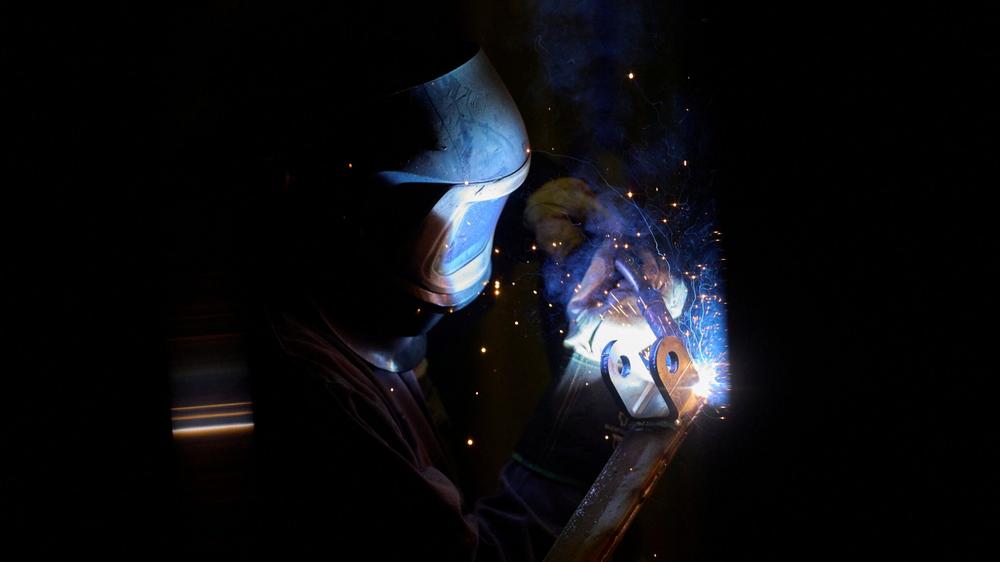
In a January 1 case study, health officials with the Centers for Disease Control and Prevention and the state of Louisiana revealed that a ninth metalworker contracted a rare, often fatal case of “welder’s anthrax,” a condition only first described in 2022.
The case occurred in September 2024 in an otherwise healthy 18-year-old male in Louisiana. He had no underlying health conditions or even any risk factors, such as smoking, vaping, or heavy alcohol use. But, just a week after developing a cough, the teen was admitted to an intensive care unit with severe pneumonia and respiratory failure, requiring intubation and mechanical ventilation.
Blood tests were positive for a bacterium in the Bacillus cereus group—which includes the species that causes classic anthrax—and his doctors quickly put the finding together with his work. For six months prior to his cough, he was working as a welder’s apprentice, doing shielded metal arc welding in the shipbuilding and repair industry.
Rare cases
Doctors suspected it was a case of welder’s anthrax and quickly got access to an anthrax antitoxin from the US Strategic National Stockpile—where it’s kept in case of a bioterror attack. Along with a tailored antibiotic regimen, the teen rapidly improved and was off ventilation 72 hours later. The doctors’ quick thinking likely saved his life; of the previous eight cases of welder’s anthrax, six were fatal.
While the report has a happy ending, it adds to a concerning and unexplained pattern of metalworkers contracting the otherwise deadly and extremely rare infection.
Standard anthrax is caused by Bacillus anthracis, which can be contracted through skin contact, ingestion, or inhalation. Its killer skills include creating an immune-evading capsule and pumping out lethal anthrax toxins, which cause cell death and swelling. In the past 20 years, there have been only nine anthrax cases in the US.
However, B. anthracis is part of the larger Bacillus cereus group, which also includes B. cereus and B. tropicus, a newly recognized species. And these species can also carry and produce anthrax toxins. Both can be found in soils, and B. cereus is considered ubiquitous in the environment.
In 2022, CDC researchers found an unexpected pattern. Since 1997, there had been seven cases of infections from Bacillus group bacteria producing the anthrax toxin—all in metalworkers. Six of the seven were welders, hence the term “welder’s anthrax,” with the remaining case in a person working in a foundry grinding metal. Of the six cases where a specific Bacillus species was identified, B. tropicus was the culprit, including in the newly reported case.
Speculating risks
It’s unclear why metalworkers, and welders specifically, are uniquely vulnerable to this infection. In their 2022 report making the connection, CDC experts speculated that it may be a combination of having weakened immune responses in the lungs after inhaling toxic metal fumes and gases created during metalwork, and having increased exposure to the deadly germs in their workplaces.
In the latest case, the teen did welding work four hours a day, four days a week, with limited ventilation, sometimes in confined spaces, and often didn’t use personal protective equipment, like a respirator. Environmental sampling of his workplace found anthrax-toxin-producing Bacillus in 28 of 254 spot samples. Other investigations of welder’s anthrax cases have found similar results.
So far, all nine cases have been detected in either Louisiana or Texas. But the experts note that cases are likely underreported, and modeling suggests these dangerous germs could be thriving in many Southern US states.
The experts also speculated that iron exposure could play a role. Bacillus bacteria need iron to live and thrive, and metalworkers can build up excess iron levels in their respiratory system during their work. Iron overload could create the perfect environment for bacterial infection. In the teen’s case, he was working with carbon steel and low-hydrogen carbon steel electrodes.
For now, the precise risk factors and why the healthy teen—and not anyone else in his workplace—fell ill remain unknown. CDC and state officials recommended changes to the workplace to protect metalworkers’ health, including better use of respirators, ventilation, and dust control.
There is also a vaccine for anthrax that’s recommended for those considered at high risk, such as certain military members, lab workers, and livestock handlers. It’s unclear if, in the future, metalworkers might also be considered in this high-risk category.
 The world’s first slotharium is opening in Orlando and it’s adorable