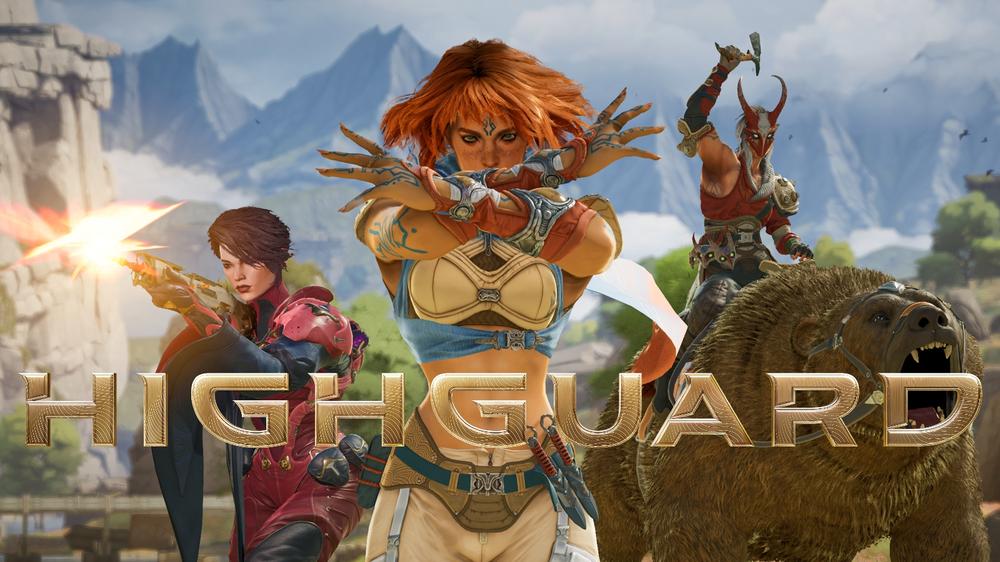
I got to try a hands-on preview of Highguard, a new free-to-play 3v3 hero/competitive/raid/tactical/looter shooter made by ex-Respawn developers, of Apex Legends and Titanfall fame. But don’t worry, it does, in fact, have an identity.
Hero shooter fatigue is the biggest challenge facing this game from independent studio Wildlight Entertainment. This was made abundantly clear after they surprised The Game Awards with a trailer that frankly, only attracted yawns. ‘Another hero shooter with quirky characters in a fantasy setting? I bet one of them goes invisible and another has a pet bird.’ You would be correct.
However, Highguard makes far more sense once you actually play it. There is the signature smooth gunplay you’d expect from these developers, paired with a clear raid-focused loop, and, frankly, a lot more that will feel immediately familiar to Apex Legends players.
The trailer called it a “new breed of shooter.” Is it? Probably not – it’s a shooter like others in many respects. So perhaps we can call it a cross-breed? Whatever you want to call it, it’s really fun, and Wildlight is banking on that being enough.
What is Highguard?
Highguard’s 3v3 matches are structured around three phases. During the opening phase, players explore the map on mounts, gather resources, and loot weapons and gear from crates. Those resources can then be spent at the vendor on upgrades, setting the stage for the first major fight.
That fight centers around a sword called the Shieldbreaker, which becomes “ready” after a few minutes. Both teams clash to secure it, and the team that successfully escorts it to the enemy base, in a capture-the-flag-esque battle, triggers the raid phase.
At that point, one team attacks while the other defends, respawns become limited, and damage is dealt to the base by destroying generators. If defenders successfully repel the raid, damage is instead applied to the attacking team’s base, creating real risk on every push.
Is Highguard just another hero shooter?
From the first match, the game’s lineage was obvious. Highguard was developed on a new engine, but the gunplay feels extremely close to Apex Legends. Weapons are responsive, movement is fluid, and firefights are intense without becoming overwhelming. Wardens are built around a familiar structure, each with a passive, tactical, and ultimate ability, alongside armor and helmet systems that mirror Apex closely.
But this isn’t an Apex clone. Highguard’s game director actually named Rust as their key inspiration, in how it handles raiding and base pressure, and I also felt some Rainbow Six Siege-like elements in the wall destruction. The pace shifts naturally between calmer preparation and high-intensity raids, and the downtime between fights helps keep matches from feeling nonstop or exhausting.
The characters themselves were a highlight. Wardens are distinct, abilities are easy to understand and use, and even when raids became chaotic, the 3v3 format kept things readable. I never became overwhelmed by visual noise, which is often a risk in ability-driven shooters.
Highguard has been in development for four years, and the team was clear that they always wanted to build a multiplayer shooter with depth. Alongside Rust, one of the more unusual inspirations was Minecraft Bed Wars, a mode where teams similarly defend a central objective while trying to eliminate their opponents through resource control and coordinated attacks.
Free-to-play done right?
In terms of monetization, Wildlight is avoiding some common free-to-play pitfalls. There are no loot boxes or RNG-based store mechanics. Cosmetics are purchased directly, and the most expensive items sit at $20, with skins available for wardens, mounts, and weapons.
There are also some trinkets like weapon charms, banners, and emotes. It is deliberately straightforward, as Wildlight explained that they wanted a store that they themselves would want as players.
World-building is present, but it is not pushed much during matches. The developers plan to expand the game’s lore largely through trailers and external content, which should help keep the focus on gameplay while still giving invested players more to dig into.
Post-launch is make-or-break for Highguard
Highguard left a strong first impression. The core loop is enjoyable, the gunplay is immediately satisfying, and the raid structure gives the game a clear identity beyond being another hero shooter. The main question is longevity. The single primary mode will need enough depth, variation, and new content to stay fresh over time.
New bases, wardens, and systems are already part of the Year 1 roadmap, and there is a Ranked mode planned, but the success of Highguard will ultimately depend on whether that central loop remains compelling months or years down the line.
I had a lot of fun playing this game for around four hours, but whether I’ll still want to keep playing it after 20 or 30 hours of base-raiding, is yet to be determined. Hero shooter fatigue was their first hurdle, but base-raiding fatigue will be the one that actually matters for Highguard.
 Conservatives melt down over a “He-Man” pronouns joke they completely missed