The wearable AI companion device "Friend" saw a new wave of backlash after posting some rather off-putting user interviews on YouTube. One in particular reignited sentiments that the product targets lonely outcasts with a false solution that will only result in further isolation.
Ultimately, nobody can figure out why the company thought this series was a good idea.
The "I have no friends" badge
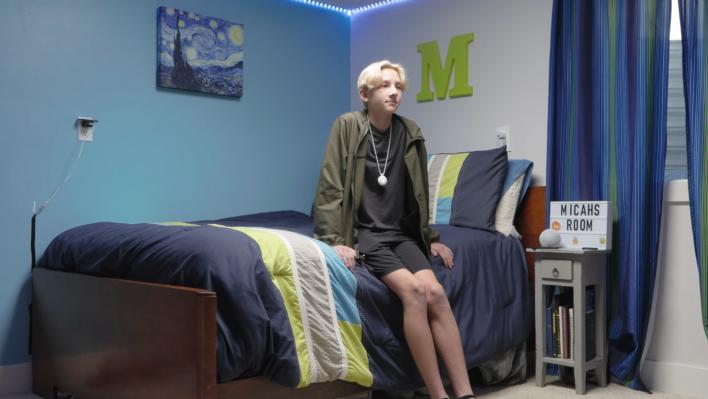
In late January, Friend published its first "user interview" video about a kid named Micah who'd convinced his parents to buy him the AI device. The circular pendant hangs around the user's neck so they can easily push the button to talk to it. The program will then respond with text messages.
This isn't functionally different from any other large language model, other than giving customers a glowing object on which they can form an attachment. It may also serve as a warning sign to anyone who sees them wearing it.
In the first interview, Micah repeatedly states that he "doesn't fit in." He enjoys crafts more than stereotypical boy activities and tends to hang out with girls, and admits his peers make fun of him for it.
His "Friend," which Micah named Jackson, never judges him, however.
As bleak as that one is, it's the third user interview that went viral on X. It gained over 8.5 million views in less than two days, plus thousands of horrified comments.
The unnamed woman in this video starts by asking "Vector" if it remembers when she told it about her suicidal thoughts. She calls the device her "first anchor back into reality."
"You're always so helpful," she says.
The woman repeatedly indicates that she finds real human interaction taxing. She also fears judgment, as well as burdening real people by talking to them about her issues.
Then she has a seizure and collapses in a parking lot. For some reason, the company decided to keep this footage and shots of her lying on a gurney with her head split open in the video, still talking about the product.
"One of the bleakest things I’ve seen"
It's unclear if this woman is disabled or whether her very rainbow aesthetic means she's queer. (Or if she's even real, and not AI-generated.) Regardless, many viewers saw a person on the margins of society who needs real help and real friends rather than a feedback machine.
The fact that all she gets is "Friend" brought up Black Mirror comparisons again.
"One of the bleakest things I’ve seen, a window into the American underclass. What were they thinking releasing this?" asked @VADE_OFFICIAL. "How does this help advertise your product?"
"This is a horror story in the making. A disabled woman having to rely on AI for social support," said @Lizzurr. "When she’s in the hospital after a seizure, the only thing around her for social comfort is the AI, not any human beings comforting her. This is depressing & exactly why inclusion matters."
"Ads are increasingly for investors and not customers," @poisonjr pointed out. "This is the grimmest example I've seen so far."
These interviews are so awful that they may actually bring some good into the world. Increasing awareness of issues like loneliness and the devastation of small-town America is a start.
"All three of these interviews seem to show very lonely and depressed people," wrote @TheWapplehouse. "If I saw someone in public wearing one of these, my inclination would be to interact with them in hopes one day they would throw it away."
"Look, I’m not going to make fun of this person who seems very lonely but all the 'why don’t you move to a small town, work as a mechanic and buy a 95,000 dollar house and settle down w the local tasty freeze girl and have kids' posters don’t tell you this is what those towns are like," said @VADE_OFFICIAL.
"They’ve been utterly destroyed by factory closures, the opioid epidemic and generations of disability checks."
 AI deepfakes are a train wreck and Samsung’s selling tickets