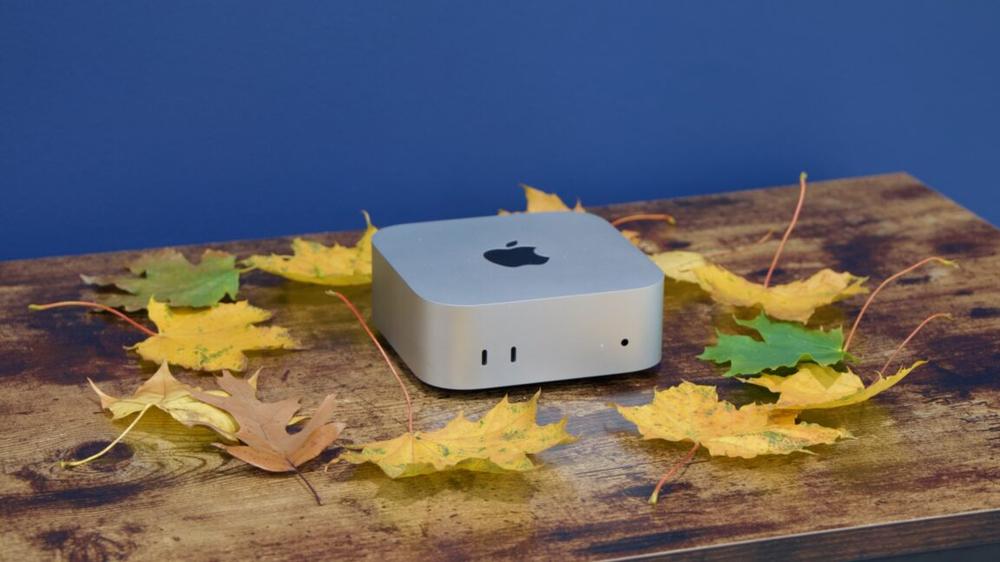
Apple plans to start manufacturing the Mac mini in the United States later this year, the company announced today, as part of its $600 billion commitment to expand its domestic manufacturing operation.
The Macs will be made in a facility in Houston, the same facility Apple uses for “advanced AI server manufacturing.” CEO Tim Cook says these AI servers are shipping “ahead of schedule.” The facility will also eventually provide “hands-on training in advanced manufacturing techniques” for students, Apple employees, “and American businesses of all sizes.”
Apple and many other US tech companies have announced plans to expand their domestic manufacturing operations, just one element of a multi-prong strategy to secure favorable treatment from a Trump administration that has been happy to threaten Apple and others with steep tariffs to get what it wants. Today’s Mac mini announcement is more subtle than the time Tim Cook delivered Trump a signed gold statue, but the goal is likely the same.
Apple didn’t mention Trump or tariff policy in its Mac mini announcement today, but the company made a similar move during Trump’s first term in 2019, when it announced it would manufacture the newly redesigned Mac Pro in its facility in Austin, Texas. This was possible, the company said at the time, because of “a federal product exclusion Apple is receiving for certain necessary components.”
The bulk of the supply chain for phones, tablets, computers, game consoles, and most other tech is still overwhelmingly reliant on overseas manufacturers. Most of Apple’s A- and M-series chips are still made in TSMC’s factories in Taiwan, and while TSMC is making some of its chips in the US, it has resisted efforts to bring more of its capacity to the US. Facilities for manufacturing memory, storage, and displays are also mostly located overseas. And that’s before you even start thinking about the facilities where all of these components are assembled into finished products.
There are signs that more chip manufacturing, at least, is coming to the US. Apple itself says that it will buy roughly 100 million chips manufactured at TSMC’s facilities in Arizona; these 4nm factories can’t make the newest A- and M-series chips, but they can make the older Apple A16 (still used in the low-end iPad) and the Apple S10 chip used in Apple Watches. Intel, itself the beneficiary of multiple sources of external investment, is still working on new factories in Ohio and elsewhere; memory manufacturer Micron is using some of its AI-fueled profits to build domestic factories as well.
But Apple’s Mac Pro announcement in 2019 wasn’t the first step toward domestic manufacturing for the company’s biggest-selling hardware, and it’s hard to see today’s announcement ushering in a major change to Apple’s manufacturing strategy, either. The Mac mini is almost certainly more popular than the Mac Pro, but it’s not nearly as big a deal as domestic iPhone, iPad, or MacBook manufacturing would be.
 IShowSpeed turns childhood favorite chips into official Doritos flavor in new Flavor Swap line