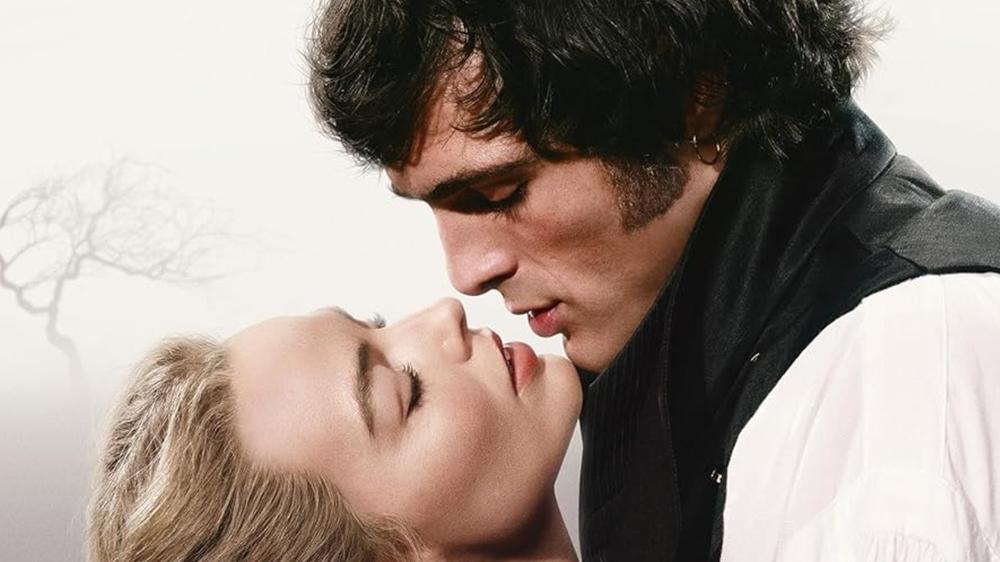
Wuthering Heights is one of the most eagerly anticipated movies of 2026, but as the Margot Robbie and Jacob Elordi movie nears release, there’s controversy concerning its approach to the source material.
Wuthering Heights is the third film by writer-director Emerald Fennell, following her sensational debut Promising Young Woman, and scintillating sophomore effort Saltburn.
For her third movie she’s tackling Wuthering Heights, the Emily Brontë novel that first hit shelves in 1847, and has been adapted multiple times for both the big screen and TV.
Here Margot Robbie plays Catherine and Jacob Elordi is Heathcliff, with the new Wuthering Heights hitting screens on February 13, just in time for Valentine’s Day. But it might not be the perfect date movie…
Is Wuthering Heights a romance?
Yes, Wuthering Heights is a romance, but what Catherine and Heathcliff feel for each other is much darker and more complicated that a traditional love story.
The book centers on their turbulant relationship, with Catherine strong-willed, passionate, and impulsive, which makes her a bad match for outsider Heathcliif, the brooding and intense orphan who was raised alongside her.
The novel explores their obsessive and destructive passion, and when their relationship fails – with Catherine marrying Edgar Linton for both status and security – it has devastating consequences that leads to cruelty, revenge, and generational trauma.
The book blends gothic horror with psychological drama, in a story that challenges the concept of idealized love, making Wuthering Heights emotionally compelling, but a toxic tale that’s ultimately more anti-romance.
Which makes it both confusing and confounding that the trailer for this new adaptation calls Wuthering Heights “the greatest love story.”
Backlash to Margot Robbie movie explained
Wuthering Heights is a story about obsessive love, and fans of the novel often obsessively love Brontë’s book, meaning there’s frequently backlash when details and plot points are changed.
As soon as 35-year-old Margot Robbie was cast as brunette teenager Cathy, and Jacob Elordi as her “dark-skinned gypsy” lover, those fans voiced concerns over the lack of accuracy. Casting director Kharmel Cochrane clapped back by telling The Guardian: “You really don’t need to be accurate. It’s just a book. That is not based on real life. It’s all art.”
More criticism followed when the first trailer was released, due to Catherine’s wedding dress being white when that wasn’t the custom of the time, perfect white teeth that aren’t period accurate, and a Charli XCX soundtrack deemed too “aggressively anachronistic.”
However Emerald Fennell believes the material is ripe for interpretation, telling The Hollywood Reporter: “I think the thing is everyone who loves this book has such a personal connection to it, and so you can only ever make the movie that you sort of imagined yourself when you read it.”
She adds: “The great thing about this movie is that it could be made every year and it would still be so moving and so interesting. There are so many different takes. I think every year we should have a new one.”
Early test screenings received a mixed reaction, with World of Reel describing the film as “hyper-sexualized,” and “far more explicit than any previous adaptation of this material.”
While one attendee called it: “tonally abrasive,” and leaning hard into “Fennell’s now-familiar brand of stylized depravity.”
But Fennell’s interpretation comes from a very personal place, with the writer-director revealing: “It’s my favorite book in the world. Like many people who love this book, I’m kind of fanatical about it, so I knew right from the get-go I couldn’t ever hope to make anything that could even encompass the greatness of this book.”
She concludes by stating: “All I could do was make a movie that made me feel the way the book made me feel.”
 Ghost in the Shell director has 10,000+ hours in Fallout 4 and still plays it