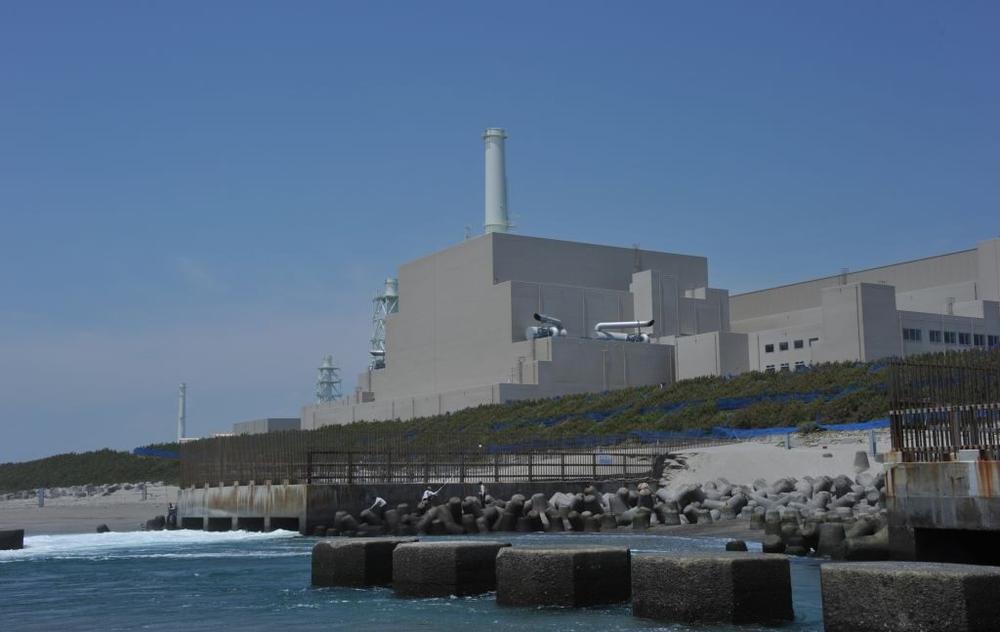
On Wednesday, Japan’s Nuclear Regulation Authority announced that it is halting the relicensing process for two reactors at the Hamaoka plant after revelations that the operator fabricated seismic hazard data. Japan has been slowly reactivating its extensive nuclear power plant collection after it was shut down following the Fukushima Daiichi disaster. The latest scandal is especially shocking, given that the Hamaoka plant is located on the coast near an active subduction fault—just as Fukushima Daiichi is.
The Nuclear Regulation Authority was reportedly alerted by a whistleblower in February of last year, but the issue became public this week when the regulators halted an evaluation process that could have led to a reactor restart at Hamaoka. This prompted the company that operates the plants, the Chubu Electric Power Co., to issue a press release describing in detail how the company manipulated the seismic safety data.
Based on an English translation, it appears that seismic risks were evaluated at least in part by scaling up the ground motion using data from smaller earthquakes. This is an inexact process, so the standard approach is to create a group of 20 different upscaled earthquake motions and find the one that best represents the average among the 20.
The company now acknowledges that since 2018, its staff has been generating large collections of upscaled earthquake scenarios, choosing one from among them, and then selecting another 19 so the average would make that event appear representative. The company does not mention how this process affected risk analysis, but it’s probably safe to assume that it was chosen specifically to make any risks seem more tolerable.
Given Japan’s slow and hesitant process of reactivating its fleet of nuclear plants, the decision to fudge safety evaluations is striking. But it’s especially notable given the location of the Hamaoka plant: directly on the east coast of Japan. That places it closer to the subduction zone off the coast that generates the country’s occasionally catastrophic earthquakes. It also places the site at risk of the sort of tsunami that caused the Fukushima plant to melt down. Although the falsified data doesn’t involve tsunami risks, you might expect that the company would be especially cautious about getting its safety data right.
In response to the revelation, the Chubu Electric Power Co. has appointed a committee of external lawyers to fully detail what was done and how it happened. And, as mentioned above, the country’s nuclear watchdog agency has terminated the safety evaluation that would need to be completed before the plant could be brought back into service. At this point, it’s not clear when this process might be restarted, much less when it might result in a restart of the reactor.
Its timing is also less than ideal for the Nuclear Regulation Authority, which is trying to regain public trust after accusations of regulatory capture that allowed major safety risks to go unrecognized. The day prior, Bloomberg reported that a staff member at the Nuclear Regulation Authority lost a phone carrying classified information while traveling through China.
 L’Oréal’s new LED face masks address all my issues with this category