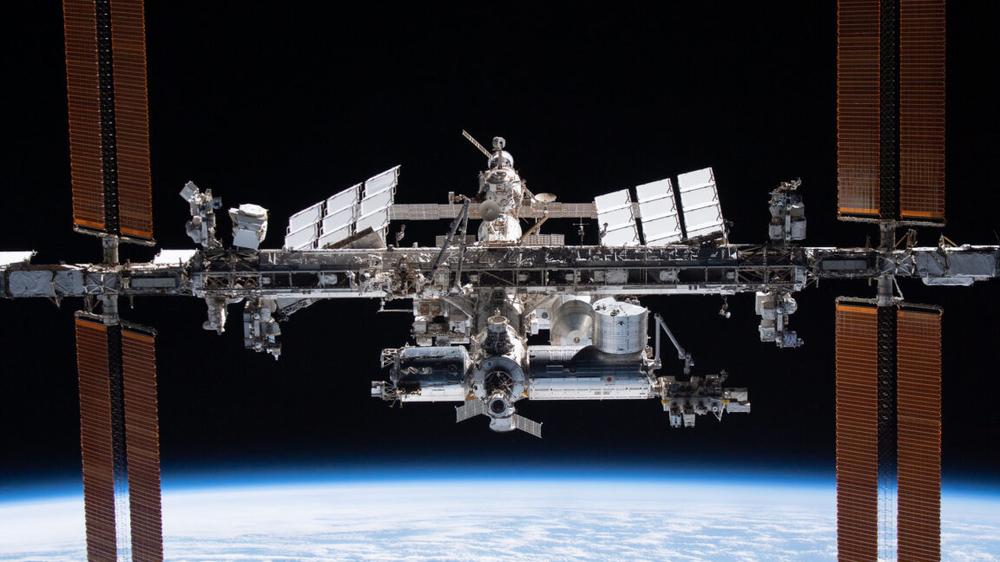
In remarks this week to a Texas space organization, a key Senate staff member said an “extension” of the International Space Station is on the table and that NASA needs to accelerate a program to replace the aging station with commercial alternatives.
Maddy Davis, a space policy staff member for US Sen. Ted Cruz, R-Texas, made the comments to the Texas Space Coalition during a virtual event.
Cruz is chairman of the Senate Committee on Commerce, Science, and Transportation and has an outsized say in space policy. As a senator from Texas, he has a parochial interest in Johnson Space Center, where the International Space Station Program is led.
“No gap”
Davis said Cruz has repeatedly reaffirmed that one of his core priorities is establishing a continuous human presence in low-Earth orbit, with “no gap” in that capability. That means he wants commercial space stations operating before the International Space Station is de-orbited, which is currently scheduled for 2030.
“He’s very painfully clear,” Davis said. “It comes up almost every time that I see him. Continuous human presence and no gap.”
To that end, Davis said she has been pressing NASA to accelerate the program to develop private space stations, known as Commercial LEO Destinations, or CLDs. In this program, NASA has previously provided funding to four different companies to develop space station concepts. The CLD program will soon enter “Phase 2,” in which these and other companies will compete for larger amounts of funding—at least hundreds of millions of dollars. One or two companies are likely to win these larger contracts. They will then build their stations with a mix of public and privately raised funding.
To kick off this competition, NASA is due to issue a long-delayed “request for proposals,” or RFP.
“Begging” for release of proposals
“Earlier today, I was having a briefing with NASA and begging for—we really needed that RFP released for CLDs like nine months ago,” Davis said. “But here we are still begging for it.”
The program has largely been stuck in neutral over the last year as the space agency’s leadership has been in flux. Interim NASA Administrator Sean Duffy threw a grenade of sorts into the process last August by issuing a new directive that changed the rules for private space stations. This appeared to favor some of the companies over others. But this directive is now being reviewed by new NASA Administrator Jared Isaacman and his team, and the requirements for these stations may well shift again.
The delays and different directives “added a lot more gray” to the process, Davis said. “It’s not very helpful for these CLDs that are trying to bring on investors,” she added.
Given that the International Space Station is now scheduled to be decommissioned in fewer than five years, Davis was asked whether Cruz would consider extending the life of the space station beyond 2030. This is a proposal favored by Boeing, which has the contract to operate the station. However, there are serious questions about the viability of the aging station, elements of which are now more than two and a half decades old.
“It’s completely dependent on the development of the CLD platforms,” Davis said of a possible extension. “And that’s not a ding or any sort of a shrouded threat there. You know, these are very highly complicated platforms, and we haven’t had much direction from NASA on it. So to answer the question, maybe. If it starts to look like we’re creeping into a situation where we are not going to have any sort of a platform or capability in LEO for humans, extension is not off the table. The chairman did that last time—it certainly is within his wheelhouse.”
Isaacman off to a good start
Cruz also played a key role in the confirmation process of Isaacman, whose nomination passed through the Commerce Committee. At times, it looked like Cruz was slow-walking the nomination, but Davis said she has liked what she’s seen from NASA’s new leader since he was sworn in to the top job about three weeks ago.
“I have high hopes,” she said. “And I think the way that he’s responded to the Crew 11 situation has been refreshing. It’s clear that he is taking it very seriously, and their communication has been almost in near real-time with us, and very clear and concise. So that has been really lovely. And then it’s clear that he wants to make sure that Artemis II goes off not just as quickly as possible but as safely.”
 Few dozen European forces arrive in Greenland as Trump threatens to acquire island by force