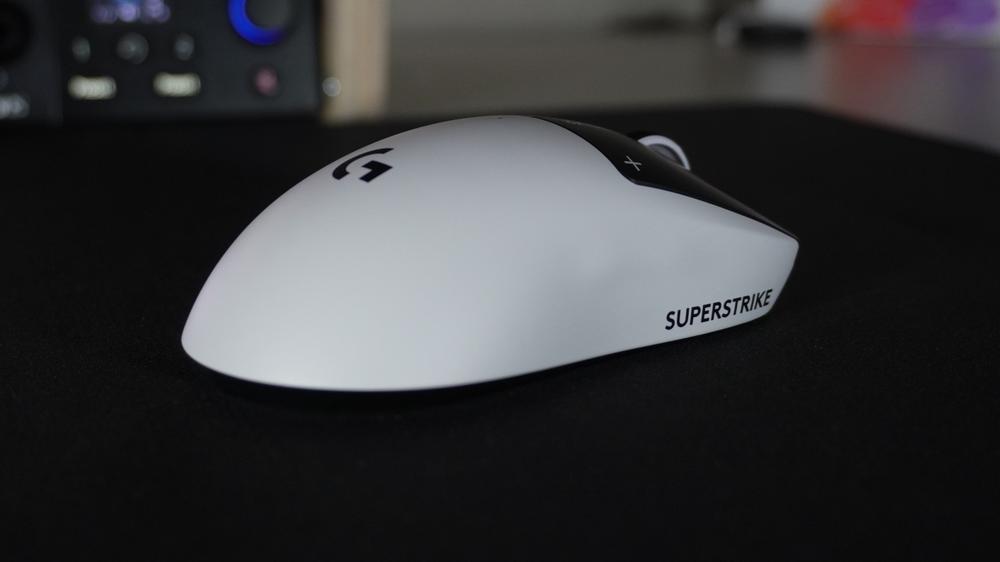
The G Pro X2 Superstrike shows Logitech is once again pushing gaming mouse hardware to the cutting edge. But, this time the innovation isn’t about weight or shape, it’s about clicks
Logitech’s G Pro X Superlight helped kick off the obsession with ultra-light FPS mice, a formula that has been refined with updates like the Superlight 2 Dex and Pro 2 Lightspeed.
The Superstrike looks familiar on the surface, but under the hood, it introduces Logitech’s new Haptic Inductive Trigger System, or HITS, which replaces traditional microswitches with inductive sensing technology designed to reduce reset time and add new levels of click customization.
The goal is simple: make every click faster, more consistent, and more tunable for competitive players. After extended testing across multiple shooters, the result feels less like a gimmick and more like a genuine improvement in how a gaming mouse can perform.
Key Specs
- Weight: 61g
- Sensor: HERO 2
- Connectivity: Lightspeed wireless, USB-C
- DPI: 100-44,000
- Polling rate: 8,000Hz
- Battery life: 90 hours of constant use
- Price: $179.99
Design & Features
The G Pro X2 Superstrike uses the same shell as the G Pro X Superlight 2, which means the shape will already be familiar. It’s a medium-to-large right-handed mouse with side buttons on the left and a matte coating that stays grippy during longer sessions. At 61g, it remains lightweight without feeling fragile, and Logitech includes optional grip tape for extra control.
Branding is more aggressive than on previous Pro-series models, with “X2” and “Superstrike” logos across the body. Whether that’s a plus will come down to preference, but it does help distinguish the mouse visually from the rest of Logitech’s lineup.
Performance fundamentals are exactly what you’d expect at this level. The HERO 2 sensor delivered consistent tracking with no spin-outs or jitter during testing, and the 8,000Hz polling rate keeps cursor response feeling immediate in fast movement scenarios.
Battery life also holds up well. While Logitech rates it at around 90 hours of constant use, real-world testing translated to multiple weeks between charges with more typical daily play.
Logitech’s new Haptic Inductive Trigger System
The real reason to consider the Superstrike is HITS.
Instead of relying on optical or mechanical microswitches, Logitech uses inductive sensors to detect button movement. The result is closer to what Hall-effect switches have done for keyboards, bringing features like adjustable actuation and Rapid Trigger behavior into a mouse for the first time in a mainstream product.
The difference is noticeable immediately. Clicks feel softer and smoother than traditional switches, and they’re nearly silent. At first, the lack of audible feedback can feel unusual, especially for players used to crisp mechanical clicks.
Logitech addresses that with adjustable haptic vibration, which recreates click feedback through subtle physical response instead of sound. Once tuned, the haptics feel surprisingly natural and help restore a sense of confirmation without adding noise.
Where HITS becomes more than a novelty is in its responsiveness. Rapid Trigger allows the click to reset the moment the button begins to rise, rather than waiting to cross a fixed reset point. Combined with adjustable actuation down to 0.1mm, this reduces the time between shots in situations where quick tapping matters, such as burst firing or rapid follow-up shots in Counter-Strike 2.
Compared to traditional switches, the biggest advantage isn’t raw speed on paper but consistency. The clicks feel more uniform regardless of how lightly or aggressively you press, which helps during high-pressure fights where timing matters. Follow-up shots feel easier to chain together, and the mouse feels more reactive without becoming uncontrollable.
There is a learning curve, though. Extremely short actuation settings can lead to accidental clicks until you dial in a comfortable threshold, and players who rely heavily on tactile or audible click feedback may need time to adjust. Haptics help bridge that gap, but the experience is different enough that some experimentation is required.
Software
The Superstrike uses Logitech G Hub for customization. Standard options like DPI adjustment, polling rate changes, button remapping, and onboard profile management are all here, but the most important additions are the HITS controls.
Rapid Trigger behavior, actuation distance, and haptic intensity can all be tuned directly in software, and finding the right balance makes a noticeable difference in how the mouse feels.
G Hub still has occasional quirks, but overall, it remains straightforward once profiles are set up. The software is essential here since HITS customization is a major part of what makes the mouse stand out.
Verdict
The G Pro X2 Superstrike isn’t a reinvention of Logitech’s mouse design, but it is a significant step forward in click technology. The Haptic Inductive Trigger System delivers faster reset behavior, deeper customization, and a new style of feedback that feels genuinely different from traditional switches. Whether you will ‘prefer’ it or not, it is impossible to say.
For competitive FPS players willing to fine-tune settings, HITS offers clear advantages in responsiveness and consistency. Casual players may not feel the same impact, but for high-level play, the technology is a glimpse of where gaming mice are heading next.
 Artist Profile: Jelly Roll