A measles outbreak in South Carolina that began in October continues to rage, with the state health department reporting Friday that nearly 100 new cases have been identified just in the last three days.
In a regularly scheduled update this afternoon, the health department said 99 cases were identified since Tuesday, bringing the outbreak total to 310 cases. There are currently 200 people in quarantine and nine in isolation. However, the outbreak is expanding so quickly and with so many exposure sites that health officials are struggling to trace cases and identify people at risk.
“An increasing number of public exposure sites are being identified with likely hundreds more people exposed who are not aware they should be in quarantine if they are not immune to measles,” Dr. Linda Bell, state epidemiologist and the health department’s incident commander for the measles outbreak, said in the announcement. “Previous measles transmission studies have shown that one measles case can result in up to 20 new infections among unvaccinated contacts.”
The outbreak is centered in the northwestern corner of the state, with cases concentrated in Spartanburg County. According to state data, in the 2024–2025 school year, only 90 percent of students in the county were fully vaccinated. That’s well below the target of 95 percent vaccination coverage that prevents vaccine-preventable infections from spreading. However, the county-wide vaccination rate likely obscures pockets where vaccination rates are even lower, making the virus more likely to spread.
Highly contagious
Measles is considered one of the most infectious diseases known to humans. It spreads through the air and can linger in a room’s airspace for up to two hours after an infected person has been present. In an exposure event, up to 90 percent of people who are unvaccinated will become infected.
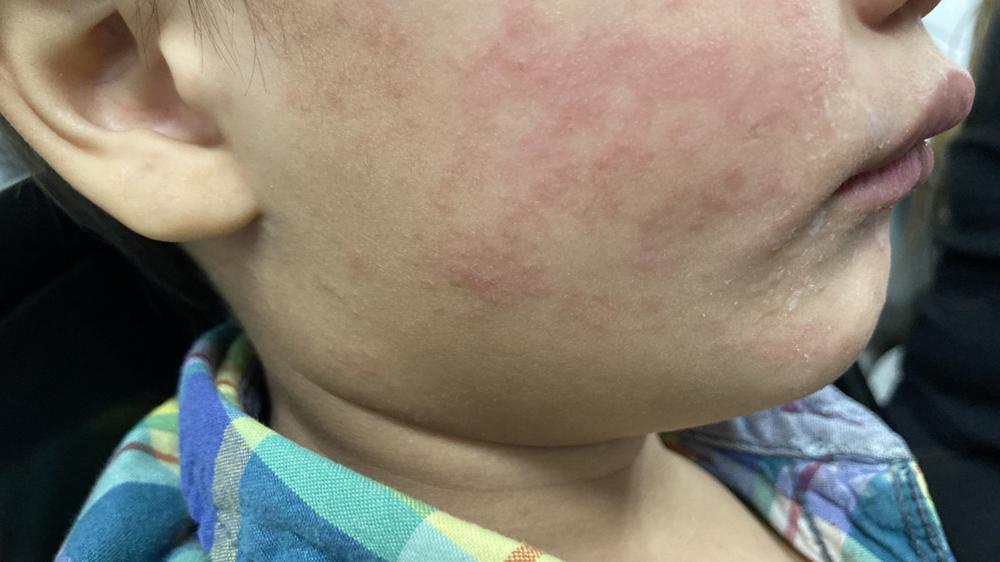
The disease usually develops seven to 14 days after an exposure, but it can take up to 21 days (which is the length of quarantine). Once it develops, it’s marked by a high fever and a telltale rash that starts on the head and spreads downward. People are contagious for four days before the rash develops and four days after it appears. Complications can range from ear infections and diarrhea to encephalitis (swelling of the brain), pneumonia, death in up to 3 out of 1,000 children, and, in very rare cases, a fatal neurological condition that can develop seven to 10 years after the acute infection (subacute sclerosing panencephalitis).
Two doses of the measles, mumps, and rubella (MMR) vaccine is considered 97 percent effective against the virus, and that protection is considered lifelong. Ninety-nine percent of the 310 cases in the South Carolina outbreak are in people who are unvaccinated, partially vaccinated, or have an unknown vaccination status (only 2 people were vaccinated).
The Centers for Disease Control and Prevention, which only has data as of January 6, has tallied three confirmed cases for this year (two in South Carolina and one in North Carolina, linked to the South Carolina outbreak). Since then, South Carolina reported 26 cases on Tuesday and 99 today, totaling 125. North Carolina also reported three additional cases Tuesday, again linked to the South Carolina outbreak. In all, that brings the US tally to at least 131 just nine days into the year.
In 2025, the country recorded 2,144 confirmed cases, the most cases seen since 1991. Three people died, including two otherwise-healthy children. In 2000, the US declared measles eliminated, meaning that it was no longer continuously circulating within the country. With ongoing outbreaks, including the one in South Carolina, the country’s elimination status is at risk.
 Russia will take over Greenland if US doesn't get there first, Trump claims