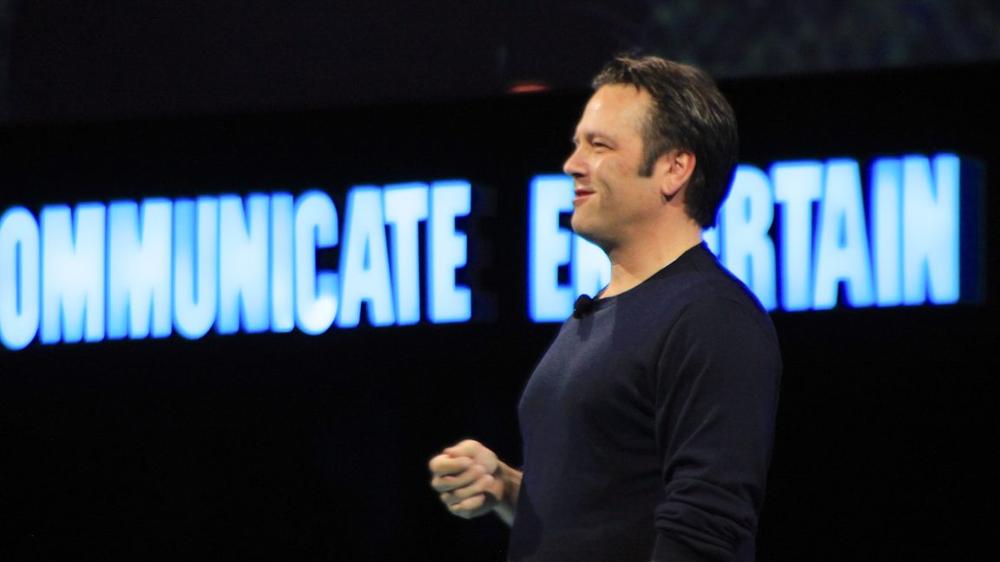
Microsoft Executive Vice President for Gaming Phil Spencer announced he will retire after 38 years at Microsoft and 12 years leading the company’s video game efforts. Asha Sharma, an executive currently in charge of Microsoft’s CoreAI division, will take his place.
Xbox President Sarah Bond, who many assumed was being groomed as Spencer’s eventual replacement, is also resigning from the company. Current Xbox Studios Head Matt Booty, meanwhile, is being promoted to Executive Vice President and Chief Content Officer and will work closely with Sharma.
In his departure note, Spencer said he told Microsoft CEO Satya Nadella last fall that he was “thinking about stepping back and starting the next chapter of my life.” Spencer will remain at Microsoft “in an advisory role” through the summer to help Sharma during the transition, he wrote.
Spencer, who got his start at Microsoft as an intern in 1988, served as a manager and executive at Microsoft Game Studios in 2003. In 2014, he took over as Head of Xbox, guiding the company through the aftermath of the troubled, Kinect-bundled launch of the Xbox One. More recently, he helped shepherd the company’s 2020 purchase of Bethesda Softworks and its $68.7 billion merger with Activision Blizzard, including the many regulatory battles that followed that latter announcement.
Meet the new boss
Sharma, who joined Microsoft just two years ago after stints at Meta and Instacart, promised in an introductory message to preside over “the return of Xbox,” and a “recommit[ment] to our core fans and players.” That commitment would “start with console which has shaped who we are,” but expand “across PC, mobile, and cloud,” Sharma wrote.
Sharma also promised the company would “invent new business models and new ways to play,” without treating its core gaming properties “as static IP to milk and monetize.” And despite Sharma’s history of managing AI products at Microsoft, she drew a line in the sand against certain types of machine-generated content.
“As monetization and AI evolve and influence this future, we will not chase short-term efficiency or flood our ecosystem with soulless AI slop,” Sharma promised. “Games are and always will be art, crafted by humans, and created with the most innovative technology provided by us.”
Nadella said that he is still “long on gaming and its role at the center of our consumer ambition” amid the executive moves. “I’m excited for how we will capture the opportunity ahead and define what comes next, while staying grounded in what players and creators value.”
The executive shakeup comes at a delicate time for an Xbox brand that debuted nearly 25 years ago. Amid cratering sales for Xbox hardware, Microsoft has recently been pivoting its gaming business to be less dependent on console exclusives and less focused on dedicated game consoles in general. Last year, in the wake of the Windows-free Steam Deck, Microsoft extended its branding to the Xbox ROG Ally line of Windows-based, gaming-focused portables.
While Microsoft still promises that a new, dedicated Xbox console is in the works, what form it will take is a matter of public speculation. In an October interview with Japan’s Famitsu magazine, Spencer pointed to the Xbox ROG Ally as an example of how the “Xbox software platform will evolve in the future, connecting all devices at one point.”
 Venom Animated Movie From Final Destination: Bloodlines Directors in the Works at Sony Pictures Animation