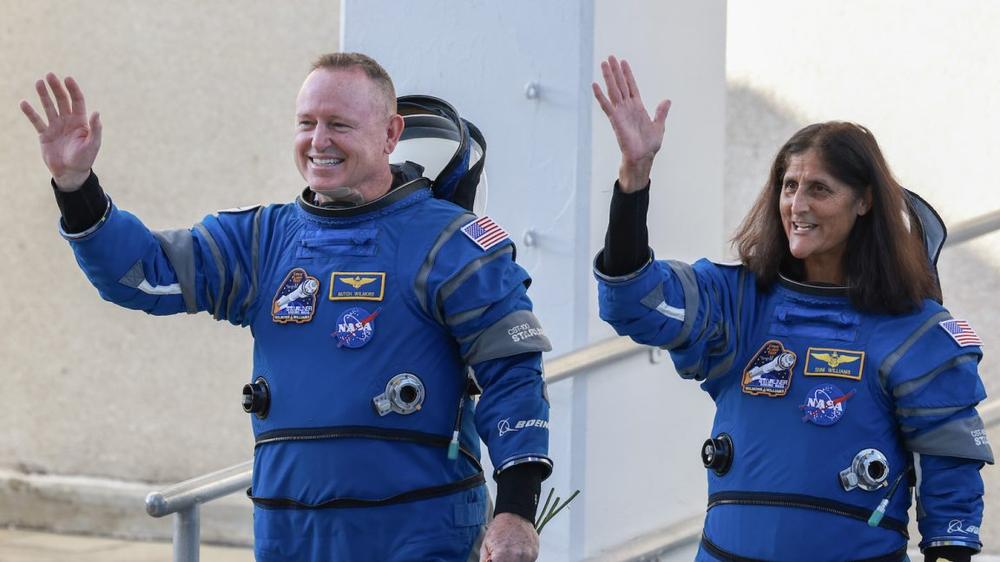
NASA on Thursday announced it has formally classified the 2024 crewed flight of the Starliner spacecraft as a “Type A” mishap, an acknowledgement that the test flight was a serious failure.
As part of the announcement, NASA Administrator Jared Isaacman sent an agency-wide letter that recognized the shortcomings of both Starliner’s developer, Boeing, as well as the space agency itself. Starliner flew under the auspices of NASA’s Commercial Crew Program, in which the agency procures astronaut transportation services to the International Space Station.
“We are taking ownership of our shortcomings,” Isaacman said.
The letter and a subsequent news conference on Thursday afternoon were remarkable for the amount of accountability taken by NASA. Moreover, at Isaacman’s direction, the space agency released an internal report, comprising 311 pages, that details findings from the Program Investigation Team that looked into the Starliner flight.
“Starliner has design and engineering deficiencies that must be corrected, but the most troubling failure revealed by this investigation is not hardware,” Isaacman wrote in his letter to the NASA workforce. “It is decision-making and leadership that, if left unchecked, could create a culture incompatible with human spaceflight.”
Isaacman said there would be “leadership accountability” as a result of the decisions surrounding the Starliner program, but did not say which actions would be taken.
“An outstanding day”
The “Type A” classification of Starliner comes more than a year and a half after the vehicle’s ill-fated, initial crewed flight in early June 2024. During the more than daylong journey to the space station after launching on an Atlas V rocket, Starliner was beset by helium leaks in its propulsion system and then intermittent thruster failures.
Still, after astronauts Butch Wilmore and Suni Williams eventually docked at the station, Boeing officials declared success. “We accomplished a lot, and really more than expected,” said Mark Nappi, vice president and manager of Boeing’s Commercial Crew Program, during a post-docking news conference. “We just had an outstanding day.”
Over the subsequent weeks of the summer of 2024, NASA mostly backed Boeing, saying that its primary option was bringing the crew home on Starliner.
Finally, by early August, NASA publicly wavered and admitted that Wilmore and Williams might return on a SpaceX Crew Dragon spacecraft. Yet Boeing remained steadfast. On a Boeing website called “Starliner Updates” that has since gone offline, as late as August 2, 2024, the company was declaring that its “confidence remains high” in Starliner’s return with crew (see archive).
It was, in fact, not outstanding
However, on August 24, NASA made it official and decided that Wilmore and Williams would not fly back on Starliner. Instead, the crew would come home on a Crew Dragon. Wilmore and Williams safely eventually returned to Earth in March 2025 as part of the Crew 9 mission.
The true danger the astronauts faced on board Starliner was not publicly revealed until after they landed and flew back to Houston. In an interview with Ars, Wilmore described the tense minutes when he had to take control of Starliner as its thrusters began to fail, one after the other.
Essentially, Wilmore could not fully control Starliner any longer. But simply abandoning the docking attempt was not a palatable solution. Just as the thrusters were needed to control the vehicle during the docking process, they were also necessary to position Starliner for its deorbit burn and reentry to Earth’s atmosphere. So Wilmore had to contemplate whether it was riskier to approach the space station or try to fly back to Earth.
“I don’t know that we can come back to Earth at that point,” he said. “I don’t know if we can. And matter of fact, I’m thinking we probably can’t. So there we are, loss of 6DOF control, four aft thrusters down, and I’m visualizing orbital mechanics. The space station is nose down. So we’re not exactly level with the station, but below it. If you’re below the station, you’re moving faster. That’s orbital mechanics. It’s going to make you move away from the station. So I’m doing all of this in my mind. I don’t know what control I have. What if I lose another thruster? What if we lose comm? What am I going to do?”
One thing that has surprised outside observers since publication of Wilmore’s harrowing experience is how NASA, knowing all of this, could have seriously entertained bringing the crew home on Starliner.
Isaacman clearly had questions as well. He began reviewing the internal report on Starliner, published last November, almost immediately after becoming the space agency administrator in December. He wanted to understand why NASA insisted publicly for so long that it would bring astronauts back on Starliner, even though there was a safe backup option with Crew Dragon.
“Pretending that that did not exist, and focusing exclusively on a single pathway, created a cultural issue that leadership should have been able to step in and course correct,” Isaacman said during the teleconference. “What levels of the organization inside of NASA did that exist at? Multiple levels, including, I would say, right up to the administrator of NASA.”
Concerns predate the crew flight test
Some of NASA’s biggest lapses in judgment occurred before the crew flight test, the report found. In particular, these revolved around the second orbital flight test of Starliner, which took place two years earlier, in May 2022.
During this flight, which was declared to be successful, three of the thrusters on the Starliner Service Module failed. In hindsight, this should have raised huge red flags for what was to come during the mission of Wilmore and Williams two years later.
However, in his letter to NASA employees, Isaacman said the NASA and Boeing investigations into these failures did not push hard enough to find the root cause of the thruster failures.
“The investigations often stopped at the proximate cause, treated it with a fix, or accepted the issue as an unexplained anomaly,” Isaacman said. “In some cases, the proximate-cause diagnosis itself was incorrect due to insufficient rigor in following the data to its logical conclusion.”
What happens next
In the 11 months since the return of Wilmore and Williams, NASA and Boeing have agreed that the next flight of Starliner, although intended to dock with the International Space Station, will fly without crew. NASA has previously said this flight could take place as early as April 2026.
However, when asked about this timeline, Isaacman reiterated that a lot of work had to be done.
“We are committed to helping Boeing work through this problem, to remediate the technical challenges, to fully understand the risk associated with this vehicle, and to try and minimize it to the greatest extent possible,” he said. “And if we can implement a lot of the report recommendations, then we will fly again.”
In a statement on Thursday, Boeing said it was “committed” to being one of NASA’s two commercial crew providers.
A source recently told Ars that two NASA astronauts, Woody Hoburg and Jessica Wittner, have begun training for a potential “Starliner-1” mission that could take flight during the first half of next year, should the uncrewed test flight in 2026 go well. NASA has not confirmed that any astronauts have been assigned to Starliner-1.
 Slay the Spire 2 Early Access Release Date Set for March as Animated Trailer Reveals 4-Player Co-Op