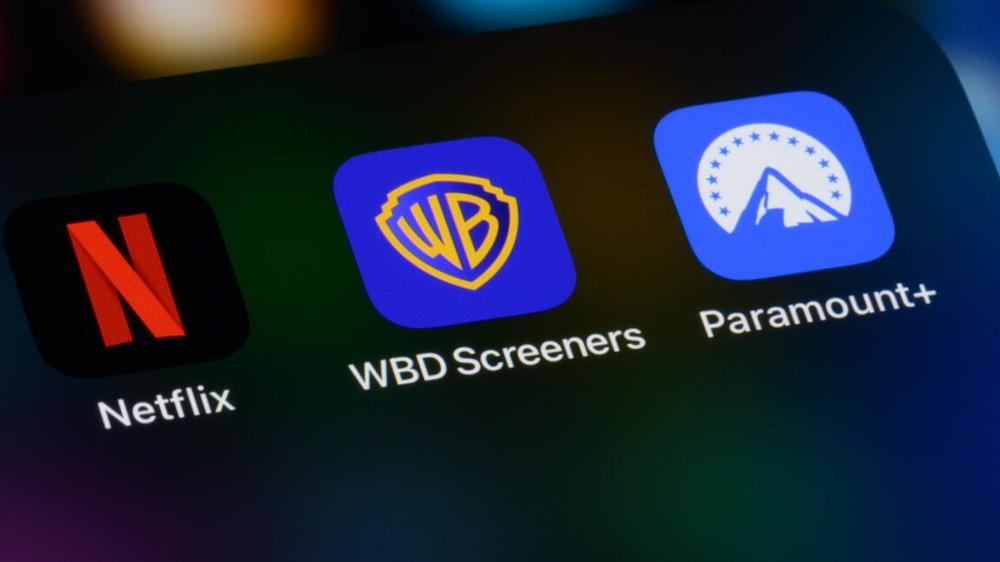
Netflix agreed to pay all cash for Warner Bros. Discovery, amending its $72 billion deal in an attempt to fight off Paramount’s hostile takeover bid.
Netflix originally agreed to buy the company with a mix of cash and stock. To sweeten the offer for shareholders, Netflix and Warner Bros. today announced that Netflix will pay all cash instead. If successful, Netflix’s purchase will include HBO Max, WB Studios, and other assets.
The price is unchanged at $27.75 per share, and Warner Bros. is targeting an April 2026 shareholder vote. The original plan was for Netflix to buy each Warner Bros. share with $23.25 in cash and $4.50 in Netflix stock.
The revised agreement “simplifies the transaction structure,” “accelerates the path to a WBD stockholder vote,” and “provides enhanced certainty around the value WBD stockholders will receive at closing, eliminating market-based variability,” today’s press release said. Netflix plans to finance the deal with “a combination of cash on hand, available credit facilities and committed financing.”
Netflix’s pending purchase of Warner Bros. has an equity value of $72 billion and an enterprise value of $82.7 billion, which includes both equity and debt. Paramount Skydance has been trying to upend the deal with its own offer to buy Warner Bros. in a hostile takeover attempt that includes a lawsuit it filed against Warner Bros. last week.
Paramount offered $108.4 billion at $30 per share, but it’s trying to buy the entire Warner Bros. Discovery company, while Netflix’s deal is for just the streaming and movie studios divisions. The Warner Bros. board wants to complete a separate spinoff of its cable TV division, which would not be possible if Paramount’s hostile takeover succeeds. The spinoff is scheduled to be completed before the closing of the sale to Netflix, and the spun-off entity would be called Discovery Global.
“By transitioning to all-cash consideration, we can now deliver the incredible value of our combination with Netflix at even greater levels of certainty, while providing our stockholders the opportunity to participate in management’s strategic plans to realize the value of Discovery Global’s iconic brands and global reach,” Warner Bros. Discovery board Chairman Samuel Di Piazza Jr. said in today’s press release.
Netflix is more likely to complete the deal, firms argue
Paramount also made an all-cash offer, but the Warner Bros. board called the Paramount bid “illusory” because it requires an “extraordinary amount of debt financing” and other terms that allegedly make it less likely to be completed than a Netflix merger.
Paramount “is a $14B market cap company with a ‘junk’ credit rating, negative free cash flows, significant fixed financial obligations, and a high degree of dependency on its linear business,” while Netflix has “market capitalization of approximately $400 billion, an investment grade balance sheet, an A/A3 credit rating and estimated free cash flow of more than $12 billion for 2026,” Warner Bros. told shareholders.
Warner Bros. and Netflix today continued to tout Netflix’s strong financial position and its ability to close the deal. “Netflix’s strong cash flow generation supports the revised all-cash transaction structure while preserving a healthy balance sheet and flexibility to capitalize on future strategic priorities,” the joint press release said.
The Wall Street Journal explained that the new “deal structure does away with a so-called collar, a mechanism meant to protect shareholders from large swings in an acquirer’s share price between the time when a deal is announced and when it closes. If Netflix shares dipped below $97.91, Warner shareholders were to get a larger portion of Netflix shares as part of the deal. If they rose above $119.67, shareholders would have received a smaller portion.”
Netflix’s stock price closed at $100.24 on December 5 and is down to about $88, partly due to investor fears that Netflix will have to pay more to complete the merger.
Paramount lawsuit loses first ruling
The Paramount lawsuit against Warner Bros. alleges that the company board failed to disclose basic information that stockholders need to decide between the Paramount and Netflix bids. The lawsuit seeks details on how Warner Bros. valued the shares in its planned spinoff, and other information such as how Warner Bros. determined that the Paramount offer was too risky.
“WBD shareholders need this information to make an informed investment decision on our offer—and importantly, Delaware law has consistently required that such information be provided to shareholders,” Paramount CEO David Ellison wrote in a letter to Warner Bros. shareholders after filing suit in Delaware Chancery Court.
Paramount says its own analysis of Discovery Global assets values the spinoff company at $0 per share.
“WBD has provided increasingly novel reasons for avoiding a transaction with Paramount, but what it has never said, because it cannot, is that the Netflix transaction is financially superior to our actual offer,” Ellison wrote. Warner Bros. reportedly responded that Paramount “has yet to raise the price or address the numerous and obvious deficiencies of its offer,” and “is seeking to distract with a meritless lawsuit and attacks on a board that has delivered an unprecedented amount of shareholder value.”
Paramount’s lawsuit hasn’t been an immediate success. A judge last week rejected Paramount’s request to expedite the case, saying it did not suffer “cognizable irreparable harm” from the allegedly inadequate disclosures.
 81-year-old YouTuber fights back tears thanking fans raising money for grandson’s cancer treatment