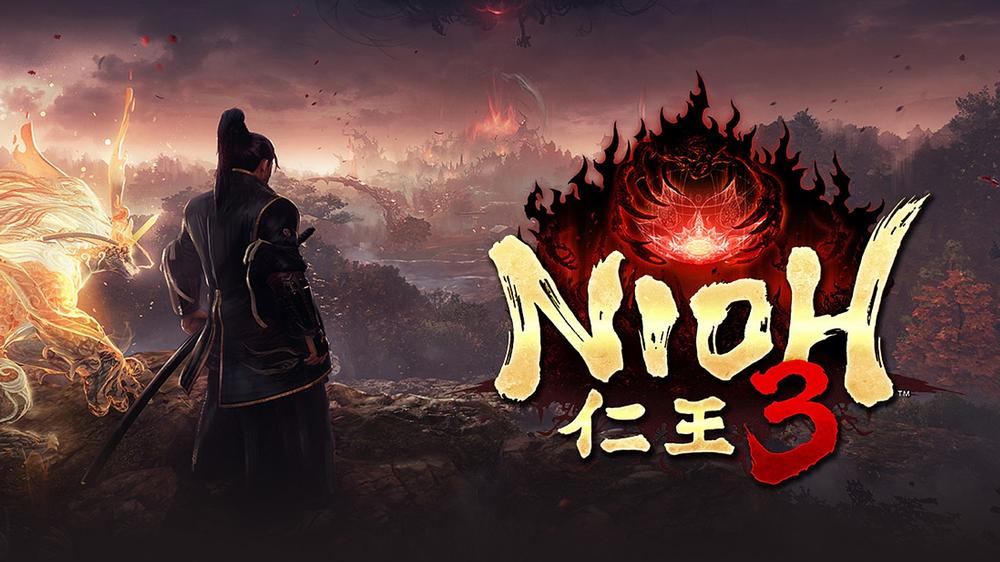
Instead of another iteration, Nioh 3 reworks the foundations of the series, trading its tightly controlled, mission-based structure for a fully open world. It’s the most radical change Team Ninja has made to the series yet, and one that, overall, sticks the landing.
The first Nioh carved out its place as a brutally demanding action RPG, earning acclaim for its technical combat and spin on Soulslikes. Where Nioh 2 refined that formula rather than reinventing it, doubling down on what already worked, Nioh 3 shoots for the stars.
The ambition is obvious, but so is the friction, as Nioh 3’s often unnecessary complexity gets in its own way by drowning strong ideas in overlapping systems, and fails to support its world with convincing voice performances.
It’s a game full of smart decisions that make Nioh 3 the best entry yet, even if it does magnify some of its predecessors’ issues.
Nioh 3 screenshots
What is Nioh 3 about?
Seeking to pass the torch of the Tokugawa shogunate to an heir, Tokugawa Ieyasu has chosen his grandson, Takechiyo (that’s you), to be his successor.
En route to the ceremony to be made shogun, hordes of demonic yokai attack. Takechiyo’s sibling, in a so-obvious-you-wouldn’t-expect-it twist, reveals his role in the invasion, jealous that his dearest brother was chosen to rule over him.
One tutorial relaying the basics of being a samurai later, you’re shepherded towards an escape route to beatdown a boss and start the adventure proper.
The sequence leaves little room for the player to absorb the dizzying array of systems quick-fired through tooltips, haphazardly explaining Burst Breaks, Guardian Spirits, and Blessings before you’ve even had time to get a feel for Nioh 3’s best addition by a country mile.
Style Shift feels like a natural evolution of Nioh’s combat. Where its predecessors never quite managed to deliver on the promise of choice between Soulslike and hack-and-slash sensibilities, Team Ninja’s threequel races past the finish line.
By decoupling methodical combat from blisteringly fast, combo-based warfare and making them their own classes, Nioh 3 channels the energy of Elden Ring and Ninja Gaiden into a single game.
Best of both worlds
Instead of forcing an impossible choice, Nioh 3 lets you seamlessly swap between Samurai and Ninja loadouts with the pull of a trigger. Both promote entirely different playstyles, boast their own unique mechanics, and have separate gear.
The former provides the traditional Nioh experience with weighty swordplay and stance dancing, while the latter leans into hit-and-run tactics with nimbler weapons like tonfa and kusarigama, and Ninjutsu – think fireballs, caltrops, and shuriken – instead of weapon stances.
Style Shift never feels like a gimmick. If anything, I found myself organically swapping between stoic samurai and fleet-footed ninja based on the threat presented to me. Foes were clearly designed with one or the other in mind, but you could comfortably meet any challenge using only one.
Alone, Style Shift is robust enough to provide all the min-maxing an RPG fan could hope for by essentially packing two game genres into one character. When Nioh 3 focuses on placing these shiny new things in your hands, it effortlessly manages to steal your time.
Annoyingly, though, it’s very good at reminding you that it has numerous resource and progression management systems constantly trying to make you spend an inordinate amount of time scrolling through menus for admin work.
Systems on systems
While combat achieves perfect balance, Nioh 3 leans a little too far in the direction of RPG elsewhere. Whether you find that a pro or a con depends on what drew you to the previous two games, but somewhere along the line, balance has been skewed.
The problem isn’t the introduction of an open world. Being able to tackle zones and explore on a whim is Nioh 3’s biggest strength, alongside Style Shift. Like Elden Ring, being able to venture elsewhere if a boss stonewalls progress makes it naturally more approachable and richly rewards doing so with skill points, upgrades, and other trinkets.
Trinkets is an apt generalization for Nioh 3’s obsession with stuff. Even 15 hours deep into exploring Japan, I continued to find items that came attached with paragraphs explaining their importance.
Soul Cores, for example, which have a chance to drop from any enemy, are necessary for crafting Onmyo Magic items. These are further subdivided by having different effects depending on whether they’re equipped in the Yin or Yang slot.
I could spend the entire review summarizing what each of the eight-plus progression systems (I gave up counting after a while) does, but it’s as much of an admin job as sifting through gear drops looking for weapons that do extra damage in Nioh 3’s tough Yokai-infested Crucible zones.
They sum up Nioh 3’s biggest sin. Yes, all of these microsystems have a fringe purpose, but they feel like content for content’s sake and repeatedly pull you away from what makes it great.
It’s the very same immersion killer that Nioh 3’s questionable voice acting is. Listening to legendary Japanese daimyo and eventual shogun Tokugawa Ieyasu speak with a British accent and unnatural inflections immediately eliminated any room for suspension of disbelief.
Neither is literally game-breaking, but shouldn’t get a free pass, either. Nioh 3 is the best build-your-own-Samurai (or Ninja) I’ve ever played. It just struggles to streamline its feature bloat and can’t deliver vocal work to elevate its folklore-inspired story.
Verdict
Nioh 3 nails the marriage between RPG and hack-and-slash from a gameplay perspective. I’m excited to jump back in to leave no stone unturned in its open world, too, but not without compromise.
Barring the essentials required to make a kick-ass Samurai/Ninja hybrid, I’ll be keeping my distance from its most annoying spreadsheet simulators and lavishing attention on mastering Style Shift.
Could Nioh 3 be prettier? Sure, but its looks aren’t a deal-breaker. Being discouraged from following the time-hopping narrative as a result of flat voice acting is the biggest downer alongside unnecessary feature bloat.
Ignoring or accepting those as downsides, Nioh 3 is one hell of an adventure. It will gladly devour your free time and richly reward you for mastering its combat, which continues to be the star of the series.
 Roblox calls its take on AI world models ‘real-time dreaming’