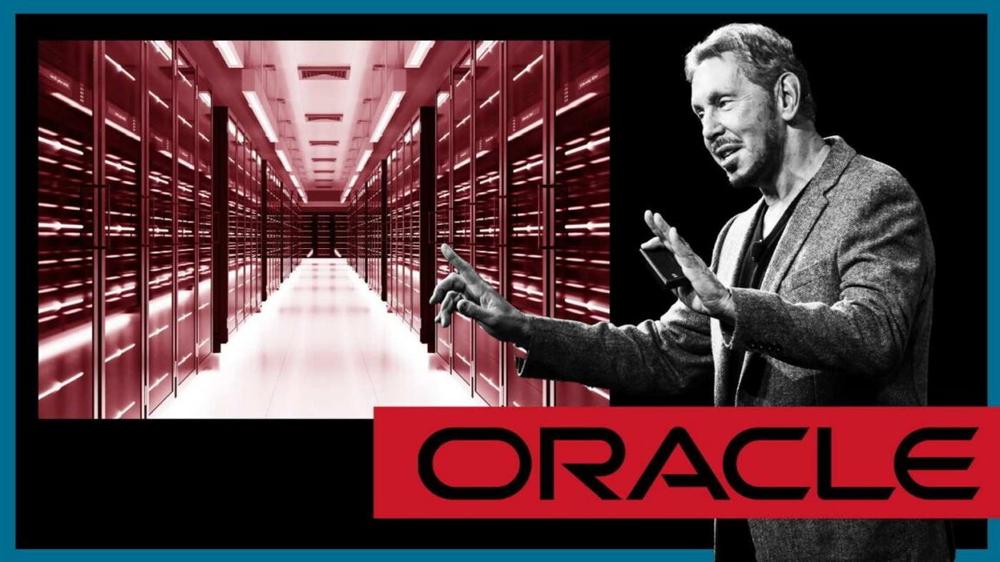
Oracle has been hit harder than Big Tech rivals in the recent sell-off of tech stocks and bonds, as its vast borrowing to fund a pivot to artificial intelligence unnerved Wall Street.
The US software group founded by Larry Ellison has made a dramatic entrance to the AI race, committing to spend hundreds of billions of dollars in the next few years on chips and data centers—largely as part of deals to supply computing capacity to OpenAI, the maker of ChatGPT.
The speed and scale of its moves have unsettled some investors at a time when markets are keenly focused on the spending of so-called hyperscalers—big tech companies building vast data centers.
Oracle shares are down 25 percent in the past month, nearly twice the fall of the next worst-performing hyperscaler, Meta.
The slide has reversed more than $250 billion of gains in its market value when the Texas-based group disclosed its deals with OpenAI in September. A Financial Times index tracking the price of Oracle’s debt has fallen about 6 percent since mid-September, significantly worse than any of its major peers.
Oracle has prompted particular concern because the group shifted from business software to cloud computing later than its rivals. Its strategy has become more focused on an all-out bet on AI, pinned largely to the success of OpenAI.
“This is a completely different business model to what investors prize in cloud services,” said Alex Haissl at Rothschild & Co Redburn. “The deals look fantastic when you look at the revenue figures, but they are very capital-intensive so create very little value.”
Investors are concerned about lofty valuations and huge capital expenditure by a few large tech groups that could backfire if a handful of lossmaking AI start-ups such as OpenAI and Anthropic fail to deliver on their promises for the technology.
Oracle shares fell 4.2 percent on Thursday as the NASDAQ tumbled 2.3 percent—the latest in a series of sell-offs led by tech stocks. The stock recovered some of those losses on Friday.
Oracle has said its deals with OpenAI would generate $300 billion of revenue between 2027 and 2032.
Its executives say the rewards will justify the risks due to intense and accelerating AI demand, which far exceeds existing supplies of computing power. Its shares are still up 30 percent this year.
Oracle’s infrastructure business is forecast to increase revenues by more than 10 times by 2029, according to estimates compiled by S&P Visible Alpha. And the bulk of Wall Street analysts are bullish on its stock.
But Oracle has been aggressive in tapping debt markets to rapidly build its capacity.
The group has about $96 billion of long-term debt, up from $75 billion a year ago, according to Bloomberg data. Morgan Stanley forecasts this will soar to about $290 billion by 2028. Oracle sold $18 billion of bonds in September and is in talks to raise $38 billion in debt financing through a number of US banks.
Ellison “is now way off the reservation in terms of how he’s spending,” said a short seller who has long tracked Oracle’s stock but does not have an active bet against it. “The market is clearly saying it is no longer interested in companies burning endless cash on AI.”
Barclays analysts this week downgraded their rating of Oracle’s debt from market neutral to underweight, warning that its large expenses on AI infrastructure had outpaced its free cash flow.
Credit rating agency Moody’s has also flagged up significant risks due to Oracle relying on a small number of AI companies. S&P Global warned that a third of Oracle’s revenues will be tied to a single customer by 2028, referring to its reliance on OpenAI.
“That is a huge liability and credit risk for Oracle. Your main customer, biggest customer by far, is a venture capital-funded start-up,” said Andrew Chang, a director at S&P Global.
OpenAI faces questions about how it plans to meet its commitments to spend $1.4 trillion on AI infrastructure over the next eight years. It has struck deals with several Big Tech groups, including Oracle’s rivals.
Of the five hyperscalers—which include Amazon, Google, Microsoft, and Meta—Oracle is the only one with negative free cash flow. Its debt-to-equity ratio has surged to 500 percent, far higher than Amazon’s 50 percent and Microsoft’s 30 percent, according to JPMorgan.
While all five companies have seen their cash-to-assets ratios decline significantly in recent years amid a boom in spending, Oracle’s is by far the lowest, JPMorgan found.
JPMorgan analysts noted a “tension between [Oracle’s] aggressive AI build-out ambitions and the limits of its investment-grade balance sheet.”
Analysts have also noted that Oracle’s data center leases are for much longer than its contracts to sell capacity to OpenAI.
Oracle has signed at least five long-term lease agreements for US data centers that will ultimately be used by OpenAI, resulting in $100 billion of off-balance-sheet lease commitments. The sites are at varying levels of construction, with some not expected to break ground until next year.
Safra Catz, Oracle’s sole chief executive from 2019 until she stepped down in September, resisted expanding its cloud business because of the vast expenses required. She was replaced by co-CEOs Clay Magouyrk and Mike Sicilia as part of the pivot by Oracle to a new era focused on AI.
Catz, who is now executive vice-chair of Oracle’s board, has exercised stock options and sold $2.5 billion of its shares this year, according to US regulatory filings. She had announced plans to exercise her stock options at the end of 2024.
© 2025 The Financial Times Ltd. All rights reserved. Not to be redistributed, copied, or modified in any way.
 Fire TV Sticks Are Already on Sale at Amazon Ahead of Black Friday 2025