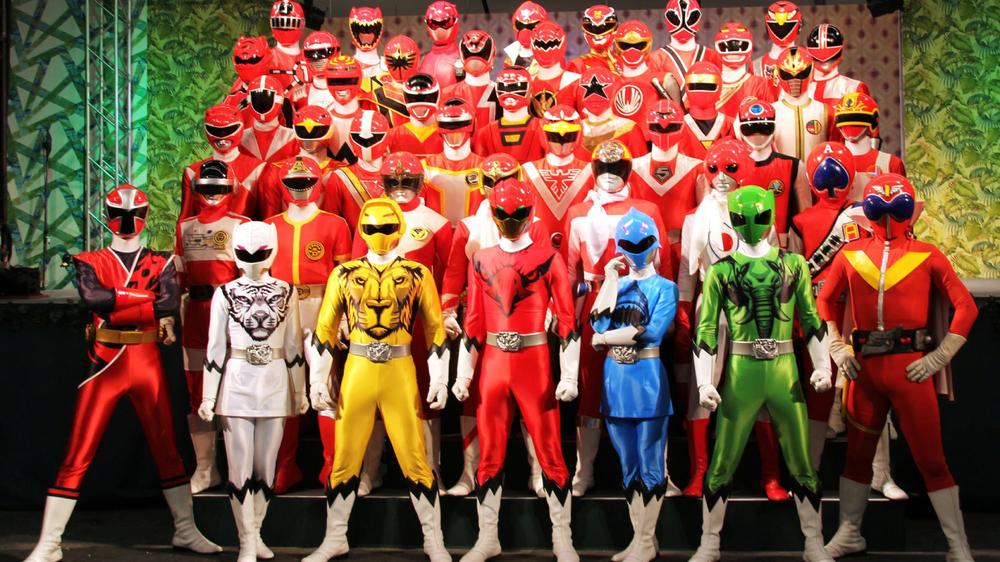
After five decades of uninterrupted weekly television, the Japanese tokusatsu institution Super Sentai has officially ended its broadcast run.
Based on announcements from Toei and TV Asahi, the long-running superhero franchise entered an indefinite hiatus following the airing of its final episode on February 8, 2026. The series finale, titled “We Are, No.1 Sentai Gozyuger!”, closes the book on a weekly run that began on April 5, 1975.
In total, Super Sentai concludes with 2,457 episodes across 49 seasons. While the brand reached its 50-year anniversary, one production gap in 1978 kept the season count below 50. Toei cited declining merchandise sales and rising production costs as the primary factors behind the decision to halt weekly production.
A Super Sentai sendoff
The ending marks the conclusion of one of Japan’s most prolific television franchises. Shortly before its finale, Super Sentai was officially recognized by the Institute of Japanese Records for featuring the “Most Henshin Heroes in a Tokusatsu Production,” with more than 300 heroes appearing across its history.
Super Sentai’s Sunday morning time slot will not remain empty for long. Beginning February 15, 2026, Toei will launch a new interconnected franchise called Project R.E.D. (Records of Extraordinary Dimensions).
The first entry, Super Space Sheriff Gavan Infinity, revives the classic Metal Hero genre with a modern redesign, including a metallic red suit. Toei has described Project R.E.D. as an “MCU-style” shared universe spanning multiple series set across different worlds, with future crossovers planned.
While executives have said a full Super Sentai revival is “not out of the question,” there are currently no plans beyond occasional manga releases or one-off films.
The end of Super Sentai also closes a crucial chapter in Western pop culture. The franchise was the direct source material for Power Rangers, which launched in 1993 using licensed Japanese footage. For decades, American producers stitched newly filmed scenes with action sequences, monster battles, and robot fights from Sentai seasons, allowing for large-scale spectacle on a smaller budget.
The original series began with Himitsu Sentai Gorenger, and Power Rangers’ debut season, Mighty Morphin Power Rangers, adapted footage from Kyoryu Sentai Zyuranger. While costumes and robots were shared, storylines often differed, with Super Sentai frequently exploring darker themes.
With Super Sentai’s weekly run now complete, Power Rangers moves into a new era built entirely on original footage and designs, ending a production model that defined the franchise for more than 30 years.
 You need to listen to the new Mandy, Indiana record: URGH