If you’re a fan of Konami’s Silent Hill games, you’ll no doubt be wondering: is Return to Silent Hill worth the wait? Unfortunately, this is one live-action adaptation that should have stayed in development hell.
Video game movies used to be the butt of jokes in Hollywood; think back to the much-maligned 1993 Super Mario Bros. movie (which, admittedly, has earned cult classic status over the years), the entirely forgettable Doom adaptation, or the ‘so bad its funny’ Alone in the Dark.
But in recent years, the curse has been broken thanks to shows like The Last of Us and Fallout. Silent Hill sits somewhere in the middle. Christophe Gans helmed the first movie in 2006, and while the script left a lot to be desired, it captured the games’ oppressive atmosphere.
M. J. Bassett’s sequel, Silent Hill: Revelation, proved far less successful. But with Gans planning a follow-up since the first film, there were high hopes Return to Silent Hill would restore the franchise – it turns out, those hopes were misplaced.
What is Return to Silent Hill about?
Loosely based on Konami’s 2001 game Silent Hill 2, the horror movie follows artist James Sunderland as he, well, returns to Silent Hill. He’s beckoned back by a mysterious letter from his lost love, Mary Crane, only to find the once-familiar town is now a wasteland covered in ash.
As James wanders through the deserted streets, he encounters other lost souls along the way, as well as all kinds of nightmarish creatures. The deeper he ventures, the more his reality begins to fall apart.
The issue with the story here is that if you aren’t familiar with the games, you’ll most likely not have a clue what’s going on. After a few brief scenes outlining James’ past and present, Return to Silent Hill abruptly pivots to the hellish townscape.
All of a sudden, there are mannequins, gravestones, classical-music-playing radios, Creepers, a ghostly girl – it’s a barrage of game references without the plot development needed to stay orientated.
The full hour and 45 minute runtime plays out in this way, leaving Return to Silent Hill feeling more like a surreal fever dream than the nightmare horror I was hoping for. Not only does this remove the emotional weight, but it also destroys any feeling of tension.
Faithful to the games but missing the point
Recent video game adaptations like The Last of Us and Arcane have shown that faithfulness to the source material alone isn’t enough. Their success comes from treating the games as a foundation and placing character development first, resulting in shows that welcome newcomers while also rewarding longtime fans.
Most frustrating of all is that there’s so much potential when it comes to adapting Konami’s Silent Hill series. One of the best elements is how they slowly build dread through immersive gameplay, but to translate this to the big screen, there needs to be characters to care about and a coherent story.
Return to Silent Hill forgets this; despite flashback scenes establishing James and Mary’s relationship, it barely scratches the surface of who they are. The remaining characters are more like caricatures, designed to attempt to propel the story forward but instead creating a hollow experience.
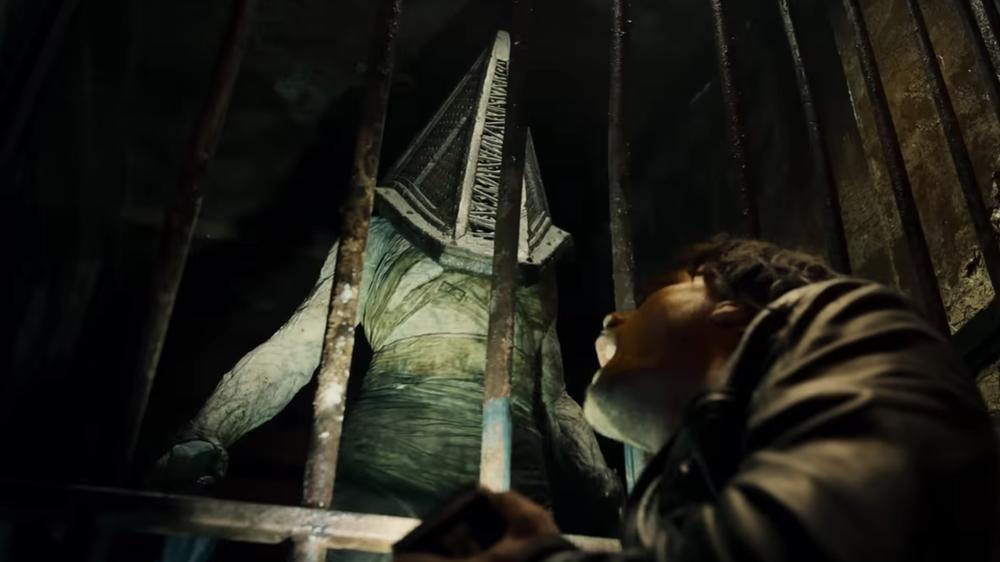
The script doesn’t help matters here – some conversations are so bad, they’re reminiscent of Tommy Wiseau’s The Room (you’re tearing me apart, Pyramid Head).
What the horror movie gets right
To its credit, Return to Silent Hill isn’t short on effort from its cast. Jeremy Irvine gives it his all as James Sunderland, even when the script gives him little to work with. Hannah Emily Anderson fares similarly as Mary, committing fully to a character severely lacking in depth.
Visually, yes, some of the CGI is undeniably rough (the Creepers, in particular, somehow look worse than their 2006 renditions). But the overall production design and creature work remain the movie’s strong point.
Several new creature concepts are genuinely unsettling, and the recreation of the iconic nurses scene is effective enough to remind you why they became such enduring symbols of the franchise.
The surrounding fog, ash, and decay are similarly authentic and engrossing. All of that’s to say, it’s clear Gans still understands Silent Hill as a place – just not how to turn it into a story, even after 20 years.
Is Return to Silent Hill good?
Return to Silent Hill is a serious case of style over substance. While it’s visually on point, it feels more interested in referencing the games than understanding why they worked in the first place.
With no clear plot or character development, you’re left with a psychological horror that is neither thoughtful nor scary.
 Telly’s "free" ad-based TVs make notable revenue—when they’re actually delivered