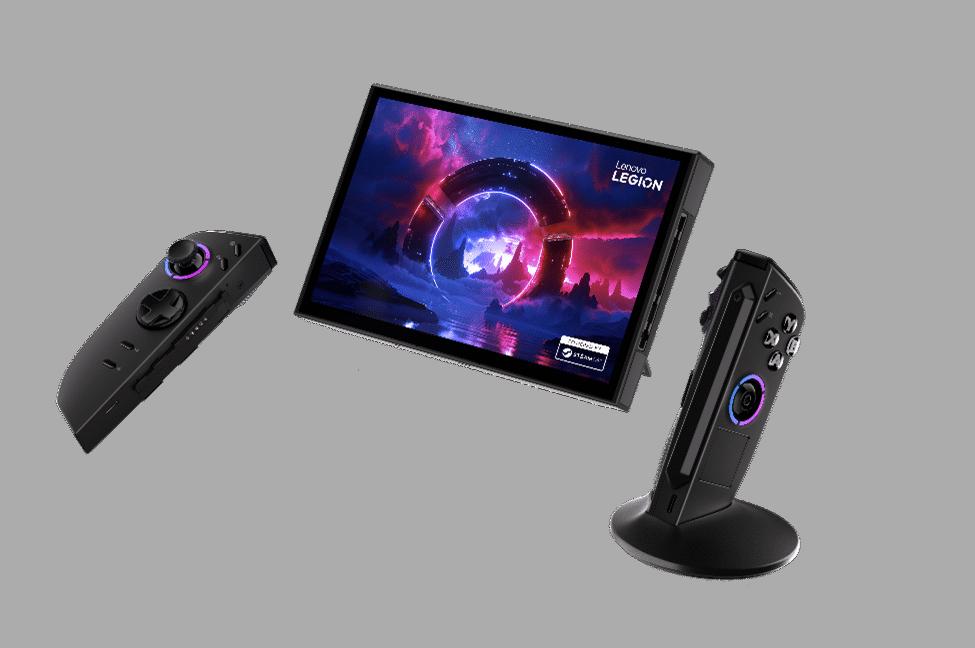
SteamOS’s slow march across the Windows-dominated PC gaming landscape is continuing to creep along. At CES this week, Lenovo announced it will launch a version of last year’s high-priced, high-powered Legion Go 2 handheld with Valve’s gaming-focused, Linux-based OS pre-installed starting in June. And there are some intriguing signs from Valve that SteamOS could come to non-AMD devices in the not-too-distant future as well.
A new SteamOS-powered Legion Go 2 isn’t exactly shocking news given how things have been going in the world of PC gaming handhelds. Lenovo became the first non-Valve hardware maker to embrace the Windows alternative when it announced a SteamOS-compatible version of the lower-end Legion Go S almost exactly a year ago. When that version hit the market last spring, Ars testing found it actually performed better than the Windows-based version of the same hardware on many popular games.
Valve has also been working behind the scenes to expand SteamOS’s footprint beyond its own hardware. After rolling out the SteamOS Compatible software label last May, SteamOS version 3.7 offered support for manual installation on AMD-powered handhelds like the ROG Ally and the original Legion Go.
Adding the upgraded Legion Go 2 to that list will give those preferring SteamOS an option to buy in to beefier, pre-built handheld hardware without crafting their own Steam Machine from component parts. Like its Windows-based cousin, the new Legion Go 2 will come equipped with a Ryzen Z2 Extreme processor (like the ROG Ally X), 32GB of LPDDR5X memory, and an 8.8-inch 1920×1200 OLED screen. It has a hefty starting price of $1,199.
The right to bear Arms
Even as SteamOS slowly spreads across the AMD-powered hardware landscape, the OS continues to be limited by a lack of compatibility with the wide world of Arm devices. That could change in the near future, though, as Valve’s upcoming Steam Frame VR headset will sport a new version of SteamOS designed specifically for the headset’s Arm-based hardware.
Over time, Valve sees that kind of support expanding to other Arm-based devices, too. “This is already fully open source, so you could download it and run SteamOS, now that we will be releasing SteamOS for Arm, you could have gaming on any Arm device,” Valve Engineer Jeremy Selan told PC Gamer in November. “This is the first one. We’re very excited about it.”
It’s an especially exciting prospect when you consider the wide range of Arm-based Android gaming handhelds that currently exist across the price and performance spectrum. While emulators like Fex can technically let players access Steam games on those kinds of handhelds, official Arm support for SteamOS could lead to a veritable Cambrain explosion of hardware options with native SteamOS support.
Valve seems aware of this potential, too. “There’s a lot of price points and power consumption points where Arm-based chipsets are doing a better job of serving the market,” Valve’s Pierre-Louis Griffais told The Verge last month. “When you get into lower power, anything lower than Steam Deck, I think you’ll find that there’s an Arm chip that maybe is competitive with x86 offerings in that segment. We’re pretty excited to be able to expand PC gaming to include all those options instead of being arbitrarily restricted to a subset of the market.”
That’s great news for fans of PC-based gaming handhelds, just as the announcement of Valve’s Steam Machine will provide a convenient option for SteamOS access on the living room TV. For desktop PC gamers, though, rigs sporting Nvidia GPUs might remain the final frontier for SteamOS in the foreseeable future. “With Nvidia, the integration of open-source drivers is still quite nascent,” Griffais told Frandroid about a year ago. “There’s still a lot of work to be done on that front… So it’s a bit complicated to say that we’re going to release this version when most people wouldn’t have a good experience.”
 CES 2026 tech you can already buy