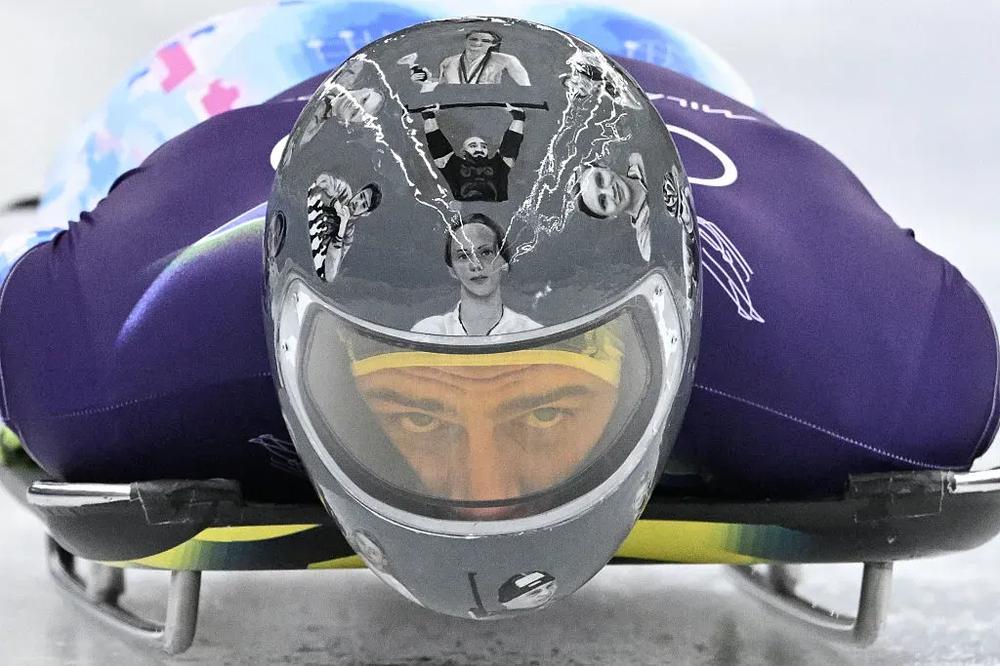
Ukrainian skeleton racer Vladyslav Heraskevych was disqualified before his first run at the 2026 Winter Olympics in Italy on Feb. 12, the International Olympic Committee (IOC) announced.
The move came days after the IOC barred Heraskevysch from using a custom helmet at the Games that depicts Ukrainian athletes killed during Russia's full-scale war. Despite this, Heraskevych continued training in the helmet.
"This is price of our dignity," Heraskevych wrote on X after the IOC's annoucement of his disqualification.
Earlier in the day, Heraskevych suggested ending the scandal by asking the IOC to lift the ban on his "memorial helmet," apologize for the "pressure" he faced, and donate generators to Ukrainian sports facilities amid the energy crisis caused by Russian attacks.
The International Bobsleigh and Skeleton Federation (IBSF) jury ruled that Heraskevych's helmet "was not in compliance with the rules."
The IOC said that Heraskevych met with IOC President Kirsty Coventry on Feb. 12, but the Ukrainian athlete "refused to consider any compromise."
"The essence of this case is not about the message, it is about where he wanted to express it," the statement read.
IOC spokesperson Mark Adams previously said that Heraskevych's helmet depicts a "conflict," saying, "There are 130 conflicts in the world, and we can't have them all featured... in the field of play during the competition."
Foreign Minister Andrii Sybiha described Heraskevych's disqualification as a blow to the IOC's reputation.
"Future generations will remember this as a moment of shame," he said. "We are proud to have Vladyslav who has not betrayed (650 Ukrainian athletes and coaches killed by Russia)."
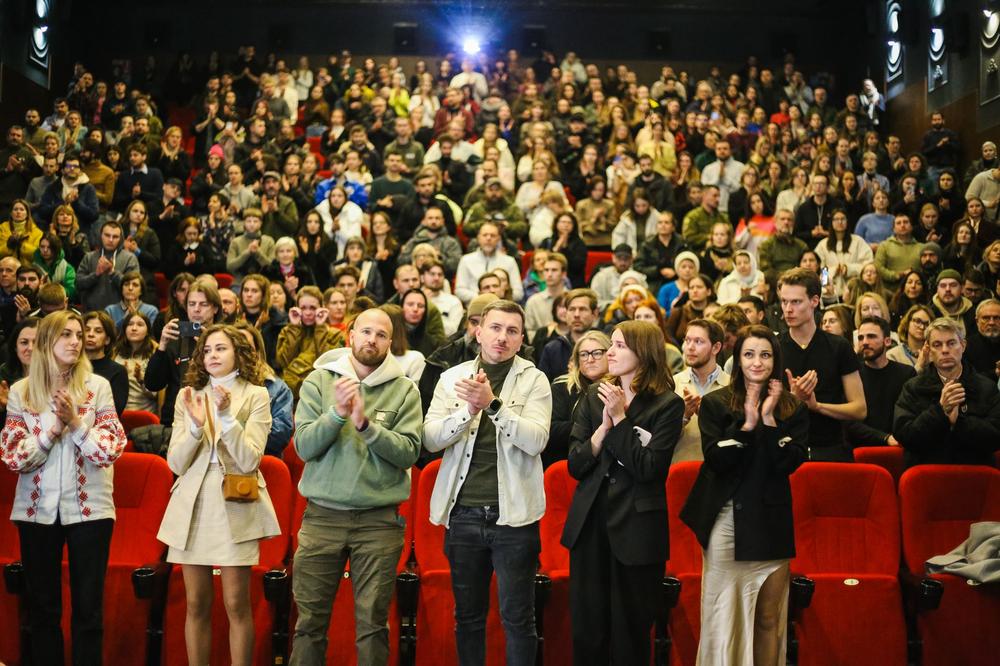
In support of the Ukrainian athlete, Ukrainian service members shared photos featuring the message "Remembrance is not a violation."
Heraskevych said he does not consider his helmet a violation of IOC rules, criticizing the IOC for hypocrisy. He pointed out that Israeli skeleton racer Jared Firestone was allowed to participate in the Opening Ceremony wearing a kippah with the names of the 11 Israeli athletes and coaches killed in the terrorist attack at the 1972 Munich Olympics.
The International Olympic Committee (IOC) has also banned two other Ukrainians from wearing their helmets at the 2026 Games.
Kateryna Kotsar, a Ukrainian freestyle skier, said the IOC disqualified her helmet for the inscription "Be Brave like Ukrainians." Oleh Handei, a Ukrainian short track speed skater, was barred from wearing his custom helmet because it is inscribed with a line of Ukrainian poetry.
Hundreds of Ukrainian athletes and coaches have been killed by Russia's all-out war, and hundreds of sports facilities have been destroyed by Russian missile and drone attacks.
While the Russian and Belarusian national teams are banned from the Olympic Games, athletes from both countries are allowed to compete in individual events under a "neutral" status. Still, many Russian athletes who compete as "neutral" participants in international competitions have ties to the Kremlin or have expressed support for the war against Ukraine.
"These are Russians who must be banned, not the commemoration of their victims. None of them are 'neutral,'" Sybiha said.
 La Range Rover si prepara al restyling: ecco come cambierà