DENVER—The Global Positioning System is one of the few space programs that touches nearly every human life, and the stewards of the satellite navigation network are eager to populate the fleet with the latest and greatest spacecraft.
The US Space Force owns and operates the GPS constellation, providing civilian and military-grade positioning, navigation, and timing signals to cell phones, airliners, naval ships, precision munitions, and a whole lot more.
One reason for routinely launching GPS satellites is simply “constellation replenishment,” said Col. Andrew Menschner, deputy commander of the Space Force’s Space Systems Command. Old satellites degrade and die, and new ones need to go up and replace them. At least 24 GPS satellites are needed for global coverage, and having additional satellites in the fleet can improve navigation precision. Today, there are 31 GPS satellites in operational service, flying more than 12,000 miles (20,000 kilometers) above the Earth.
Another motivation is to replace the oldest active GPS satellites, some of which have been in space since the late 1990s, with newer satellites better suited for the modern world. Beginning in 2005, the military has deployed GPS spacecraft with additional civilian signals for aviation and interoperability with Europe’s Galileo navigation satellites. At the same time, the military introduced a new military-grade signal called M-code, designed for warfare.
M-code is more resistant to jamming, and its encryption makes it more difficult to spoof, a kind of attack that makes receivers trust fake navigation signals over real ones. The upgrade also allows the military to deny an adversary access to GPS during conflict, while maintaining the ability for US and allied forces to use M-code.
Interference with navigation signals is on the rise, especially in the Middle East, the eastern Mediterranean, and around Russia and Ukraine. US officials attribute much of the interference to Russia as its military struggles to defend against drone attacks.
Recent high-profile examples of GPS interference include an incident in 2024 that resulted in a fatal airline crash, killing 38 people. The International Air Transport Association reported a 500 percent increase in GPS spoofing incidents in 2024.
For these reasons, the Space Force is prioritizing the launch of new GPS satellites better equipped to repel all of this jamming and spoofing. Currently, 26 of the 31 operational GPS satellites carry M-code capability, enough for global coverage with little margin. But just 19 of the 31 satellites broadcast the higher-power civilian L5 signal, which is more resistant to interference than the civilian signals onboard satellites launched before 2010.
Not delivering
The road toward GPS modernization hasn’t been easy. RTX, formerly known as Raytheon, was years late and billions of dollars over budget in delivering new control software to operate the newest GPS satellites. And the rocket the Space Force planned to use for launches of the last few GPS satellites had delays of its own.
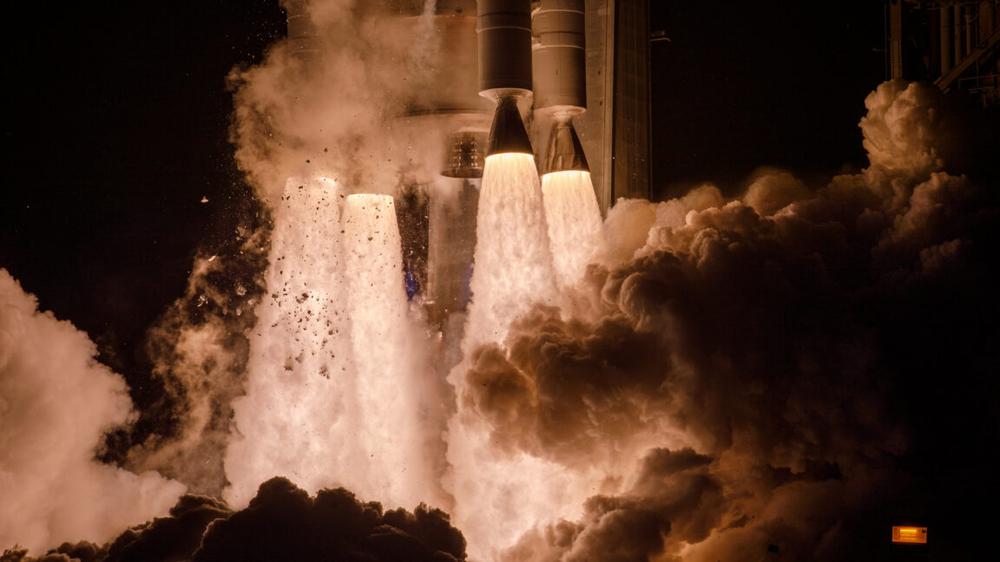
This would be United Launch Alliance’s Vulcan rocket. It has launched four times, all successfully, but has twice had to overcome serious anomalies with its solid rocket boosters.
One of the rocket’s strap-on rocket motors, supplied by Northrop Grumman, flew off its exhaust nozzle shortly after liftoff on the second Vulcan launch in 2024. The problem kept the rocket from launching again for 10 months as industry and military officials investigated the malfunction. The third Vulcan launch went off without a hitch last August, but the most recent flight February 12 suffered a remarkably similar problem with one of its solid rocket boosters.
The rocket compensated for the booster anomaly and continued the climb into orbit with multiple payloads for the Space Force. Several hours later, Vulcan’s upper stage released the satellites into an on-target orbit, and officials declared the mission successful.
But military officials aren’t eager to test Vulcan’s ability to overcome such a dramatic problem again.
“Any time there’s an anomaly, my team is going to be actively engaged with the contractors to make sure we understand what happened and we correct that issue,” said Col. Eric Zarybnisky, program acquisition executive for Space Systems Command’s space access program. “We’re still in the initial phases of that investigation, so we’ll continue to work with United Launch Alliance and their suppliers to make sure we’ve got the right level of insight and we understand where that investigation is headed.”
Zarybnisky spoke with reporters Wednesday in a roundtable at the Air Force and Space Force Association’s Warfare Symposium near Denver. He said it was too early to provide details on the direction of the investigation but predicted it would be a “many months process” to identify the “exact technical issue” and the corrective actions required to prevent it from happening again.
After the first booster issue in 2024, investigators identified a manufacturing defect in a carbon composite insulator, or heat shield, inside the nozzle. The latest incident suggests the defect was not fixed or that there is a separate problem with Northrop’s boosters.
In the meantime, the Space Force is pausing its future launches on the Vulcan rocket. With the prospect of a monthslong wait for Vulcan to return to flight, military officials are looking at other options to get their satellites into space. In practice, there is just one alternative: SpaceX’s Falcon 9.
“We are going to work through this anomaly before I go back and continue launching with United Launch Alliance on the Vulcan,” Zarybnisky said. “I’m going to look for every flexibility I have to make sure that I can deliver warfighter capability as quickly as possible. I’ve got a number of tools in my toolkit to do that, but until this anomaly is solved, we will not be launching national security space missions [on Vulcan].”
The next military launch on the Vulcan rocket was expected to be another new GPS satellite. “I’ve not made a change at this point, but I’m absolutely looking at all the ways that I can get capability on orbit fast,” Zarybnisky said.
Rocket roulette
In a little more than a year, the Space Force has launched three GPS satellites in relatively quick succession on SpaceX Falcon 9 rockets. All three were originally booked to launch on ULA’s Vulcan rocket. The first of these three newest GPS satellites, manufactured by Lockheed Martin, was declared complete and ready for launch in August 2021. Three years later, with ULA’s Vulcan rocket still not ready, the Space Force decided to switch it to a SpaceX launcher.
Space Systems Command, which oversees most of the Space Force’s spacecraft and launch procurement activity, gave ULA contracts to launch future GPS satellites in compensation for the rocket swap.
The status of several more Vulcan military launches scheduled for this year is also unclear. One of the Space Force’s most expensive satellites ever was supposed to launch on a Vulcan rocket in the coming months. This missile-warning satellite, estimated to cost more than $4 billion, will be parked in geosynchronous orbit to detect the heat plumes of ballistic and hypersonic missiles.
The Pentagon’s dissatisfaction with the Vulcan program is not new. In May 2024, the defense official then in charge of procuring space hardware wrote a letter to Boeing and Lockheed Martin—ULA’s corporate parents—outlining his concerns about the Vulcan rocket’s entry into service. “Currently there is military satellite capability sitting on the ground due to Vulcan delays,” wrote Frank Calvelli, the assistant secretary of the Air Force for space acquisition under the Biden administration.
Moving GPS launches to the Falcon 9 is relatively straightforward for the Space Force. Falcon 9s have launched most of the newest batch of GPS satellites, so engineers understand how to rapidly integrate the spacecraft with SpaceX’s rocket. The Space Force’s new geosynchronous missile-warning satellites are both booked on ULA’s Vulcan, so a last-minute rocket swap might not be so easy.
“It was tremendously beneficial for the past decision to make GPS qualified on multiple providers,” said Menschner, deputy commander at Space Systems Command. “I think that we have seen the benefits of that. The ability to switch from one provider to another is present in those vehicles. That just isn’t [available] in some of the other families of vehicles.”
 KTM 990 RC R TRACK, la supersportiva esclusivamente per la pista