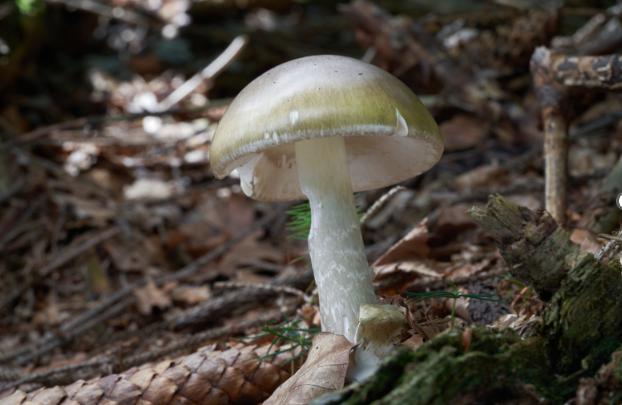
A third person has died in a rash of poisonings from wild, foraged mushrooms in California, health officials report.
Since November, a total of 35 people across the state have been poisoned by mushrooms, leading to three people receiving liver transplants in addition to the three deaths. Health officials in Sonoma County reported the latest death last week.
Michael Stacey, Sonoma’s interim health officer, attributed the cases and deaths to an extraordinary boom in the prevalence of death cap mushrooms (Amanita phalloides), noting that in an average year, the state sees fewer than five mushroom poisoning cases.
“Early rains and a mild fall have led to profusion of the toxic death cap mushrooms in Northern California,” Stacey said in the announcement. “Eating wild mushrooms gathered without expert identification can be unsafe. Some harmful varieties closely resemble edible mushrooms, even to experienced foragers.”
In an interview with Ars Technica on Monday, Craig Smollin, medical director for the San Francisco division of the California Poison Control System (CPCS) and an emergency medicine professor at the University of California, San Francisco Medical Center, said that death cap mushrooms tend to flourish between November and March in the state, though not usually to this extent.
Killer combination
Death cap mushrooms get their name because they contain an amatoxin, which inhibits mRNA transcription, leading to a shutdown of protein synthesis and then cell death. This is toxic to any part of the body, but the poisonings are mostly known for causing liver failure. After ingestion, amatoxins are rapidly absorbed from the gastrointestinal tract and transported to the liver, where they quickly begin destroying the organ.
Amid this year’s surge in death caps and poisonings, CPCS and other health officials have urged people not to forage for mushrooms. Not only can death cap mushrooms look nearly identical to common, edible fungi, no preparation makes them less lethal. Amatoxins are highly stable—cooking, boiling, freezing, or drying has no effect on their toxicity.
Early signs of poisoning usually begin six to 24 hours after eating the mushrooms. Those symptoms can include watery diarrhea, nausea, vomiting, abdominal pain, and dehydration. A person may experience a brief improvement after that, but potentially fatal liver damage can still develop within 48 to 96 hours.
When those cases occur, the CPCS is usually the first to know, with health care providers contacting the system to consult on case management, Smollin told Ars. Of the 35 cases that have been reported, he knew of one case that is still being treated in a hospital, with the latest cases reported on January 4.
Smollin and the CPCS—along with the state and county health departments—have been working to get the word out about the threat since cases started cropping up in November. “We’ve made some inroads into that,” he said, with case counts seeming to have slowed down before the holidays. But, he said, some of the people who forage for mushrooms are part of immigrant communities who can be harder to reach with health information.
Officials are working on more outreach, including putting up signs in areas where death caps are known to fruit. CPCS is also planning on holding another media event later this week.
 New Hellblade That's More of a 'Game' Reportedly In the Works, Ninja Theory No Longer Working on Project Mara